
What Is Spätzle?
Spätzle are soft German egg noodles that are a little different from regular pasta. I always think of them as somewhere between a noodle and a tiny dumpling. They are soft and chewy, and all those little uneven edges are perfect for catching butter and gravy.
Spätzle come from Swabia in southern Germany, especially the area around Baden-Württemberg. You will also find them in Austria, Switzerland, and South Tyrol.
The name is really cute too. It comes from the word Spatz, which means “sparrow.” Spätzle roughly means “little sparrows.” The name is said to come from the shape of the little noodles when they were traditionally made by hand.
And that is another thing I love about Spätzle: they don’t need to look perfect. Actually, they shouldn’t! The homemade shape is part of what makes them so good.
Traditionally, the dough was scraped from a wooden board straight into boiling water. Today, you can still make them that way, or you can use a Spaetzle press, colander, or grater.
Why I Love This Recipe
I love recipes like this because the ingredients are so simple. Flour, eggs, milk, and salt turn into something that feels like real comfort food.
Spätzle are also one of those side dishes you can use in so many ways. I love them simply tossed with butter, but they are even better when there is a good gravy on the plate. They soak it all up!
And if you have leftovers, don’t throw them away. Fry them in a little butter the next day until the edges get golden. Honestly, I sometimes like them even more this way.
You can also turn them into cheesy Käsespätzle, which is a whole meal on its own.
A Short History of Spätzle
Spätzle have been part of Swabian cooking for a very long time. Written records of them go back to at least the 1700s, but families were likely making simple noodles like these even earlier.
In the past, Spätzle were often made with spelt flour because spelt grew very well in this part of Germany. They started as a simple and filling food made from ingredients families already had at home.
Over time, they became an important part of Swabian cooking. You will find them next to roasts and gravy, with lentils and sausage, or covered in cheese as Käsespätzle.
The traditional way of making them is my favorite to watch. The cook puts the soft dough on a wooden board and quickly scrapes tiny pieces straight into boiling water. It looks difficult at first, but people who grew up doing it make it look so easy!
Spätzle are so connected to the region that Schwäbische Spätzle and Schwäbische Knöpfle have had protected status in the European Union since 2012.
There is even a Spätzle museum in Bad Waldsee. I love little food traditions like this because they show how something made from just a few simple ingredients can become such an important part of a region and its families.
Key Ingredients & Substitutions
All-purpose flour: Regular all-purpose flour works perfectly here. Traditionally, Spätzle were also made with spelt flour, so you can use that if you want to try a more traditional variation.
Eggs: Eggs are very important in Spätzle. They give the noodles their rich taste and soft, chewy texture. I use 4 large eggs for 2 cups of flour, which makes it easy to remember: about two eggs for every cup of flour.
Milk: Milk makes the dough a little richer and softer. Start with ⅓ cup. If the batter is too thick, you can slowly add more. Water also works if you don’t want to use milk.
Salt: There aren’t many ingredients here, so don’t skip the salt. I add it to the batter and also salt the cooking water.
Butter: This is the best part! I like to toss the cooked Spätzle in butter before serving. You can also fry them for a few minutes until some of those little edges turn golden.
Which Spätzle Maker Should You Use?
You really don’t need a special tool to make Spätzle. There are a few different ways to shape them, and I think this is where the recipe can look more confusing than it really is.
The biggest thing to remember is the batter.
If you push the batter through a tool, you want it a little firmer. If the batter falls through the tool, you want it a little looser.
Once you know that little rule, choosing a method becomes much easier.
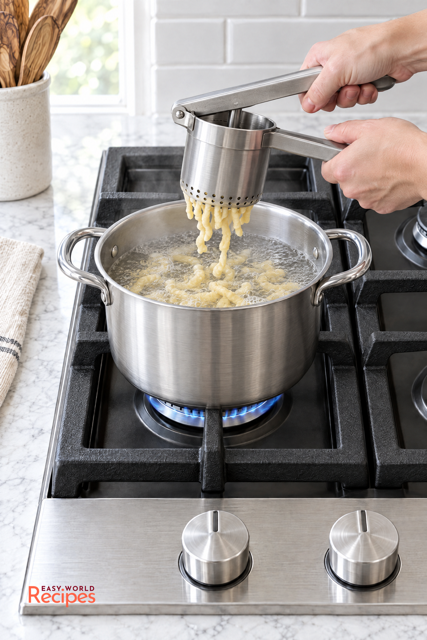
Spaetzle Press or Potato Ricer
A Spaetzle press looks a little like a potato ricer. You put the batter inside and press it directly over the boiling water.
This is one of the easiest methods to control. Because you are pushing the batter through the holes, it can be a little firmer.
If you have to push really hard, though, your batter is probably too thick. Add a tiny bit of milk and try again.
Traditional Board and Knife
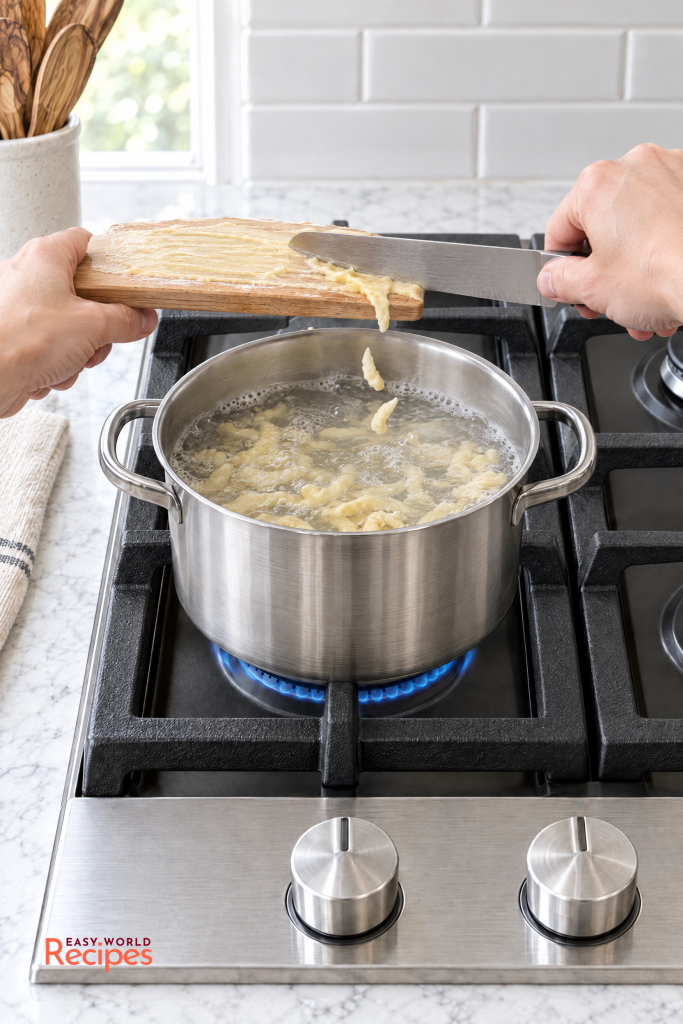
This is the old-fashioned Swabian way, and I think it is the most fun one to see.
Put some batter on a wet wooden board and hold it over the pot. Then use a knife or dough scraper to cut thin pieces from the edge of the board straight into the boiling water.
The batter should be a little looser for this method. It takes some practice, so don’t worry if your first few noodles look funny. They are homemade Spätzle. They are supposed to be a little uneven!
Colander
No Spaetzle maker? A metal colander with large holes works too.
Put some batter in the colander and push it through the holes with a spatula or spoon. The batter should be a little looser so it can fall easily into the water.
This method makes smaller, rounder pieces.
Coarse Grater
A coarse Spaetzle grater works in a similar way. The batter falls through the larger holes and makes thinner, shorter noodles.
Again, use a slightly looser batter here. If the batter will not fall through, add just a little milk.
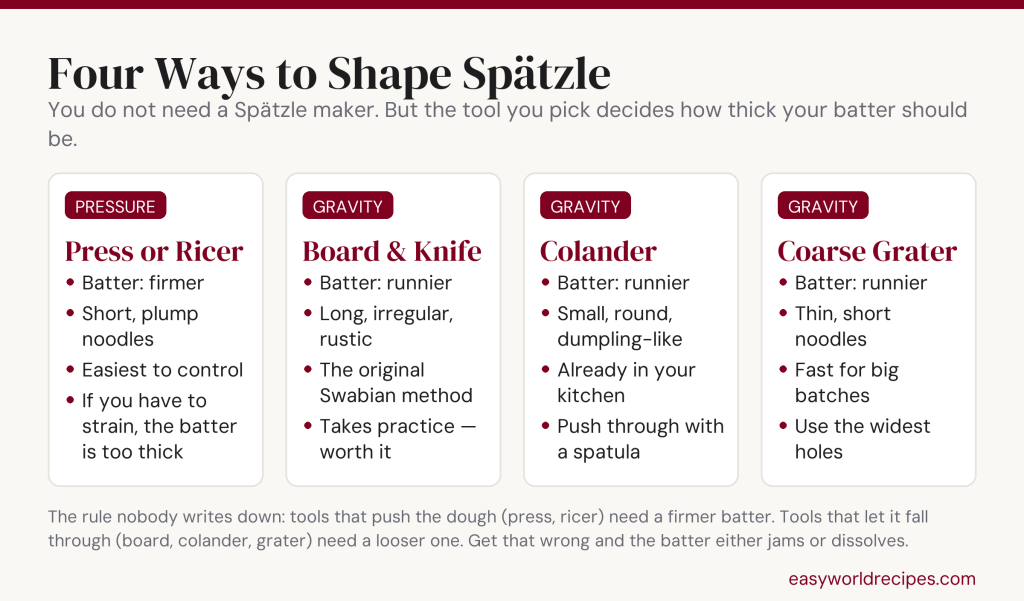
My tip: Don’t worry too much about making every noodle the same size. Spätzle should look homemade. The important thing is getting the batter right for the tool you are using.
Step-by-Step Instructions for Spätzle
1. Make the Batter
Add the flour and salt to a large bowl. Add the eggs and ⅓ cup of milk, then start mixing everything together.
Keep mixing until you have a thick and sticky batter. If it feels much too thick, add a little more milk.
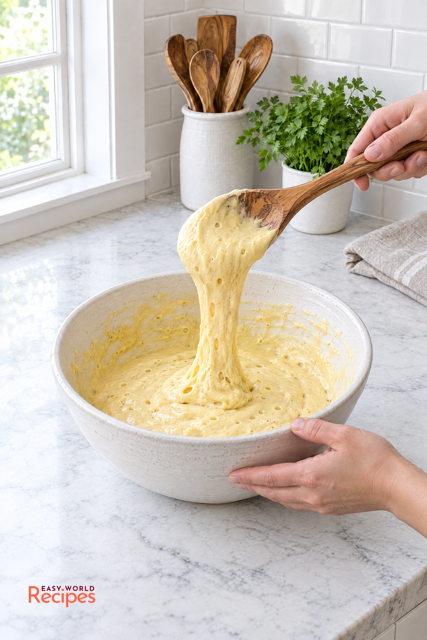
Don’t worry if it doesn’t look like pasta dough. It shouldn’t! Spaetzle batter is much softer. It should be a little thicker than pancake batter and fall from your spoon in a thick ribbon.
2. Beat the Batter Until You See Bubbles
Now keep beating the batter with a wooden spoon. You want it to become smooth, stretchy, and full of little air bubbles.
When you lift your spoon, the batter should stretch before falling back into the bowl. You may also see little holes opening in it.
This is what I look for instead of watching the clock. Once I see those bubbles and that stretchy texture, I know it is ready.
3. Let It Rest
Let the batter rest for 10–15 minutes.
It is a small step, but don’t skip it. It gives the flour time to absorb the liquid and makes the batter easier to work with.
While it rests, bring a large pot of salted water to a gentle boil. You can also get a large bowl of ice water ready.
4. Cook One Test Noodle
Before you add lots of batter to the pot, test just one little noodle.
This is such an easy trick, and it can save the whole batch.
If the noodle falls apart in the water, your batter is probably too thin. Add one tablespoon of flour and try again.
If you can barely push the batter through your tool, it is too thick. Add one tablespoon of milk and try again.
5. Shape the Spätzle
Now use whichever method you picked above and shape the batter straight into the boiling water.
Work in small batches. I know it is tempting to get it all done at once, but too much batter will cool the water and the noodles can start sticking together.
Expert Tips for Perfect German Spaetzle
Look at the batter, not only the measurements. Eggs can be different sizes and flour can absorb liquid differently. Your batter should be thick, sticky, and a little thicker than pancake batter.
Look for bubbles. Beat the batter until it becomes stretchy and you start seeing little air bubbles and holes. That’s a much better sign that it’s ready.
Always make one test noodle. I really recommend this. It takes a few seconds and lets you fix the batter before the whole bowl goes into the pot.
Match the batter to your tool. A press needs firmer batter. A colander, grater, or board works better with a looser batter.
Salt the water. Spätzle only cook for a few minutes, so the water needs enough salt to give them some flavor.
Don’t overcrowd the pot. Small batches are much easier. The noodles cook more evenly and don’t stick together as much.
Use the ice bath. It stops the cooking while you work on the next batch.
Add butter if they need to wait. If dinner isn’t ready yet, toss the drained Spätzle with a little butter. It keeps them from sticking together.
Spätzle Variations
Once you know how to make the basic Spätzle, you can do so much with them. They don’t have to stay a simple side dish.
Käsespätzle
This is probably my favorite way to turn Spätzle into a full meal. Käsespätzle is made with Spätzle, lots of melted cheese, and golden onions.
It is warm, cheesy, and very comforting. If you love mac and cheese, I think you will understand why people love this one!
Krautspätzle
Krautspätzle combines Spätzle with sauerkraut, and many versions also add bacon.
You get the soft noodles, salty bacon, and that little sour bite from the sauerkraut. It is especially good when the weather gets cold.
Lentils with Spätzle
In Swabia, you will also find Linsen mit Spätzle — lentils with Spätzle. It is often served with sausage.
It is not a fancy meal, and I think that is part of why it feels so comforting. It is the kind of simple family food that people grow up eating.
Sweet Spätzle
And this surprised me the first time I learned about it: Spätzle can be sweet too!
Kirschspätzle are made with cherries, while Apfelspätzle use apples. You may also find them served with browned butter, cinnamon, and sugar.
We usually think of Spätzle as something that goes under gravy, so I love that there is this completely different side to them too.
What to Serve with Spätzle
If there is one thing Spätzle love, it is gravy! Those little uneven noodles catch sauce so well, which is why you see them next to so many German meat dishes.
One of my favorite pairings is Jägerschnitzel. The crispy schnitzel, creamy mushroom gravy, and buttery Spätzle are just so good together.
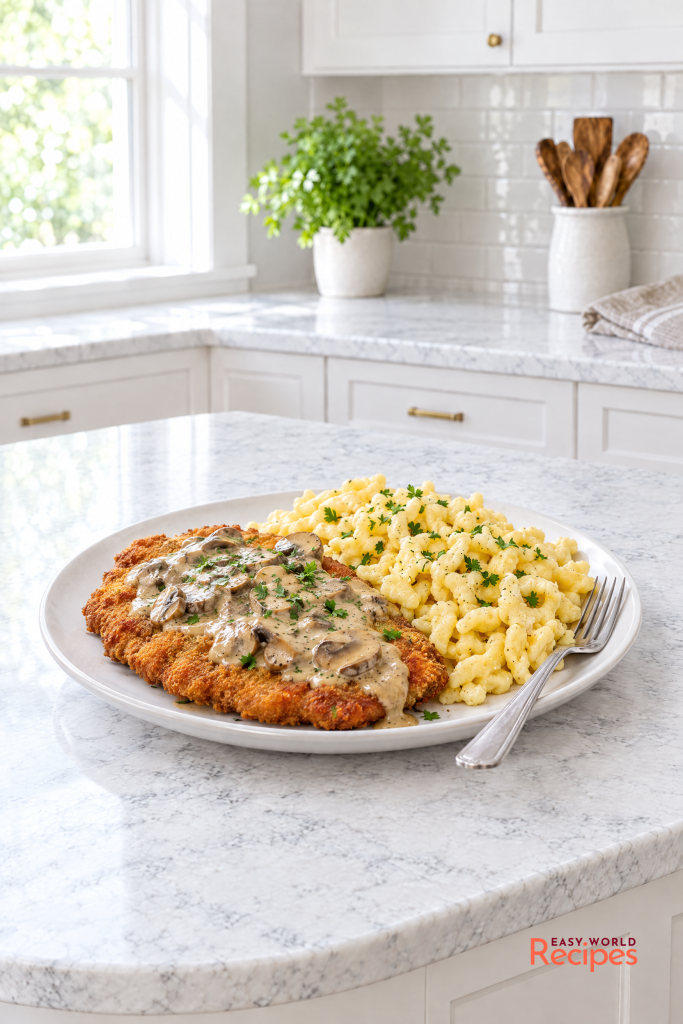
Sauerbraten is another great choice. Spoon some of that sweet and sour roast gravy right over the noodles.
I also love Spätzle with German Rouladen. The rich beef gravy is exactly the kind of sauce these noodles are made for.
For another cozy dinner, serve them with German goulash. The thick paprika sauce gets into all those little edges.
Zwiebelrostbraten is another classic pairing with beef, onions, and lots of sauce.
If you want something creamy, try Rahmschnitzel or Königsberger Klopse.
You can also keep things simple and serve Spätzle next to German pork schnitzel or Wiener Schnitzel.
For a bigger German dinner, they work well with Schweinshaxe, Frikadellen, or German red cabbage.
And if you want a very Swabian table, you can even serve them alongside Maultaschen.
Of course, Spätzle don’t always have to be a side dish. Add cheese and onions and turn them into Käsespätzle, and suddenly they are the whole dinner.
Make-Ahead and Storage
You can definitely make Spätzle ahead of time. This is really helpful if you are making a bigger German dinner and don’t want to be standing over a pot while everything else is ready.
Once the Spätzle are cooked and cooled in the ice bath, drain them really well. Toss them with a little butter and keep them in an airtight container in the fridge for up to 3 days.
To reheat them, add a little butter to a frying pan and cook the Spätzle until they are hot. I like to leave them for an extra minute or two so some of the edges get golden.
You can freeze them too. Spread the cooked and drained Spätzle on a baking sheet in one layer and freeze them first. Once they are frozen, move them into a freezer bag or container. This keeps them from freezing into one big lump.
Frequently Asked Questions
Can I freeze Spaetzle?
Yes. Cool and drain the cooked Spätzle very well, then freeze them in a single layer before transferring them to a freezer-safe container. You can reheat them in a skillet with butter straight from frozen or briefly warm them in hot water first.
What’s the difference between Spaetzle and Knöpfle?
They use the same basic dough but have a different shape. When the noodle is long compared with its width, it is usually called Spätzle. Shorter, rounder pieces are called Knöpfle, meaning “little button.” In everyday speech, the names are often used interchangeably and vary by region. The round Knöpfle shape is especially associated with the Allgäu and Bavarian Swabia.
How is Spaetzle different from pasta?
Spätzle are made from a soft, pourable batter instead of the firm dough used for most Italian pasta. They are also much richer in egg and are shaped directly into boiling water instead of being rolled, extruded, or dried. They cook in only a few minutes and have a softer, chewier, more dumpling-like texture.
What does Spaetzle mean in English?
There isn’t really a direct English name, so we normally still call them Spaetzle or German egg noodles. The German name comes from Spatz, meaning “sparrow,” and Spätzle roughly translates to “little sparrows.”
What do Germans serve with Spaetzle?
Spätzle are especially popular with dishes that have plenty of gravy, including Zwiebelrostbraten, Sauerbraten, Jägerschnitzel, Rouladen, and German goulash. They are also served as the main part of dishes such as Käsespätzle or with lentils and sausage.They use the same basic dough but have a different shape. When the noodle is long compared with its width, it is usually called Spätzle. Shorter, rounder pieces are called Knöpfle, meaning “little button.” In everyday speech, the names are often used interchangeably and vary by region. The round Knöpfle shape is especially associated with the Allgäu and Bavarian Swabia.
Why is my Spaetzle batter too runny or too thick?
Spaetzle batter should be sticky and slightly thicker than pancake batter. When you lift your spoon, it should fall back into the bowl in a thick ribbon. If it is too thick to go through your tool, add milk one tablespoon at a time. If it is so thin that the noodles dissolve in the water, add flour one tablespoon at a time. Also remember that a Spaetzle press needs slightly firmer batter than a colander or grater.
Can I make Spaetzle without a Spaetzle maker?
Yes. A Spaetzle maker is convenient, but you can use a colander with large holes, a Spaetzle press or potato ricer, or the traditional board-and-knife method. Just remember that a press works better with slightly firmer batter, while a colander or grater works better with slightly looser batter.
How do I reheat leftover Spaetzle?
The easiest way is to melt a little butter in a skillet and sauté the Spaetzle over medium heat until hot. Letting them cook for an extra minute or two gives some of the edges a delicious golden finish.
Can I freeze Spaetzle?
Yes. Cool and drain the cooked Spätzle very well, then freeze them in a single layer before transferring them to a freezer-safe container. You can reheat them in a skillet with butter straight from frozen or briefly warm them in hot water first.
What’s the difference between Spaetzle and Knöpfle?
They use the same basic dough but have a different shape. When the noodle is long compared with its width, it is usually called Spätzle. Shorter, rounder pieces are called Knöpfle, meaning “little button.” In everyday speech, the names are often used interchangeably and vary by region. The round Knöpfle shape is especially associated with the Allgäu and Bavarian Swabia.
How is Spaetzle different from pasta?
Spätzle are made from a soft, pourable batter instead of the firm dough used for most Italian pasta. They are also much richer in egg and are shaped directly into boiling water instead of being rolled, extruded, or dried. They cook in only a few minutes and have a softer, chewier, more dumpling-like texture.
What does Spaetzle mean in English?
There isn’t really a direct English name, so we normally still call them Spaetzle or German egg noodles. The German name comes from Spatz, meaning “sparrow,” and Spätzle roughly translates to “little sparrows.”
What do Germans serve with Spaetzle?
Spätzle are especially popular with dishes that have plenty of gravy, including Zwiebelrostbraten, Sauerbraten, Jägerschnitzel, Rouladen, and German goulash. They are also served as the main part of dishes such as Käsespätzle or with lentils and sausage.They use the same basic dough but have a different shape. When the noodle is long compared with its width, it is usually called Spätzle. Shorter, rounder pieces are called Knöpfle, meaning “little button.” In everyday speech, the names are often used interchangeably and vary by region. The round Knöpfle shape is especially associated with the Allgäu and Bavarian Swabia.
Why is my Spaetzle batter too runny or too thick?
Spaetzle batter should be sticky and slightly thicker than pancake batter. When you lift your spoon, it should fall back into the bowl in a thick ribbon. If it is too thick to go through your tool, add milk one tablespoon at a time. If it is so thin that the noodles dissolve in the water, add flour one tablespoon at a time. Also remember that a Spaetzle press needs slightly firmer batter than a colander or grater.

Authentic German Spaetzle Recipe (Spätzle)
- Total Time: 30 minutes
- Yield: 4 servings 1x
Description
This Spätzle recipe is simple, comforting, and full of flavor! Homemade German egg noodles make the perfect addition to any hearty meal.
Ingredients
For the Spaetzle
- 2 cups all-purpose flour
- 4 large eggs
- 1/3 cup milk, plus more as needed up to 1/2 cup
- 1 1/2 teaspoons salt
- 2 tablespoons butter, for serving or sautéing
Instructions
-
Make the batter: In a large bowl, combine the flour and salt. Add the eggs and ⅓ cup milk. Beat until you have a thick, sticky batter. Add a little more milk if needed. Continue beating until the batter is stretchy, pulls away from the bowl, and small air bubbles appear.
-
Rest: Let the batter rest for 10–15 minutes. Meanwhile, bring a large pot of well-salted water to a gentle boil and prepare a bowl of ice water.
-
Test the batter: Cook one small test noodle. If it dissolves, add a tablespoon of flour. If the batter is too difficult to push through your Spaetzle maker, add milk one tablespoon at a time.
-
Shape and cook: Working in batches, press or scrape the batter into the boiling water using a Spaetzle maker, press, colander, or board and knife. Cook for 2–3 minutes, or until the noodles float to the surface.
-
Cool: Remove the cooked Spätzle with a slotted spoon and immediately transfer them to the ice water. Repeat with the remaining batter, then drain everything very well.
-
Finish with butter: Melt the butter in a large skillet. Add the drained Spätzle and toss until hot and coated in butter. Cook a little longer if you like lightly golden edges. Serve immediately.
Notes
- Spätzle batter should be slightly thicker than pancake batter and fall from a spoon in a thick ribbon.
- A Spaetzle press needs slightly firmer batter, while a colander or grater works better with slightly looser batter.
- Add extra milk or flour only one tablespoon at a time.
- Cook the noodles in small batches so the pot does not become overcrowded.
- Toss drained Spätzle with a little butter if you are not serving them immediately.
- Prep Time: 10 minutes
- Cook Time: 20 minutes
- Category: Side dish
- Cuisine: German
Nutrition
- Calories: 320
- Fat: 12g
- Saturated Fat: 6g
- Carbohydrates: 38g
- Protein: 12g
Nutrition information
This website gives estimated nutritional information, which might change depending on the ingredients used.

We also fry leftover spaetzle in butter then add a couple eggs and scramble into them. Sooo yummy!