French ratatouille is one of my favorite ways to use fresh summer vegetables. It’s colorful, full of flavor, and somehow tastes even better after it has had a little time to rest.
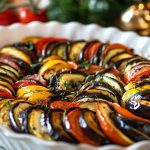
There are actually two ways I want to show you how to make it. The first is the beautiful layered ratatouille you see in the photos, with thin slices of zucchini, eggplant, tomatoes, and peppers arranged in a spiral. The second is the more traditional Provençal version, where the vegetables are cooked separately and then gently simmered together.
Both are delicious, but they are quite different. I’ll show you exactly how to make both so you can choose the one that works best for you.
Table of Contents
What Is Ratatouille?
Ratatouille is a French vegetable dish from Provence, especially the area around Nice. Traditional ratatouille is a rustic stew made with eggplant, zucchini, peppers, tomatoes, onions, garlic, olive oil, and herbs.
The vegetables are usually cooked until soft and full of flavor, but they should still keep some of their shape. It’s simple food, but when the vegetables are fresh and in season, you really don’t need much else.
You may also know ratatouille as the beautiful dish with thin slices of vegetables arranged in circles. That version looks amazing, but it isn’t quite the same as traditional Niçoise ratatouille.
That is why I’m sharing both versions here. You can make the pretty layered version for the table, or make the traditional stovetop stew when you want something a little more rustic and comforting.
Ratatouille Two Ways: Layered Spiral vs Traditional Stew
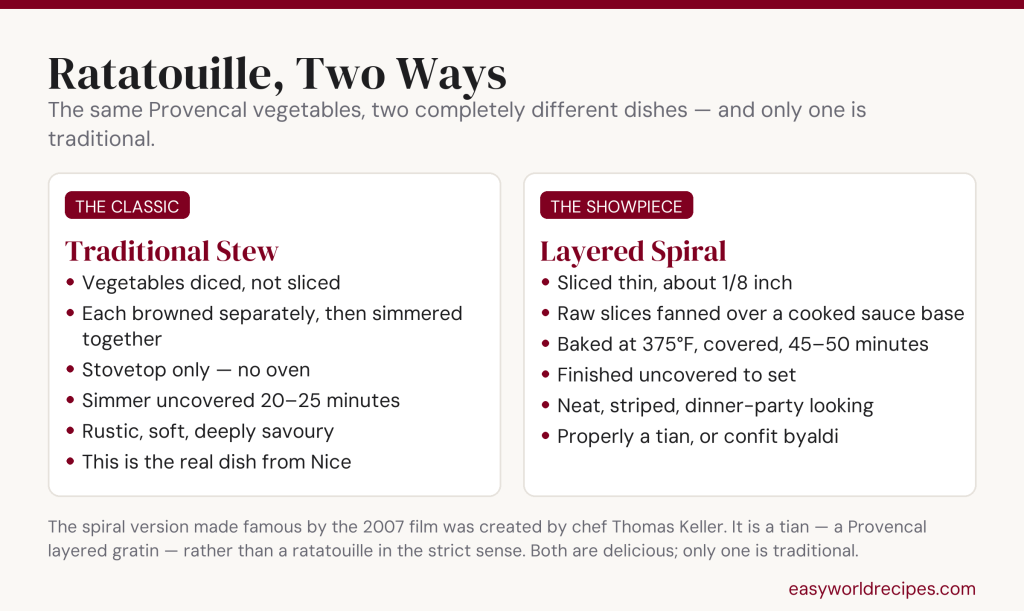
There are two very different dishes that people often call ratatouille.
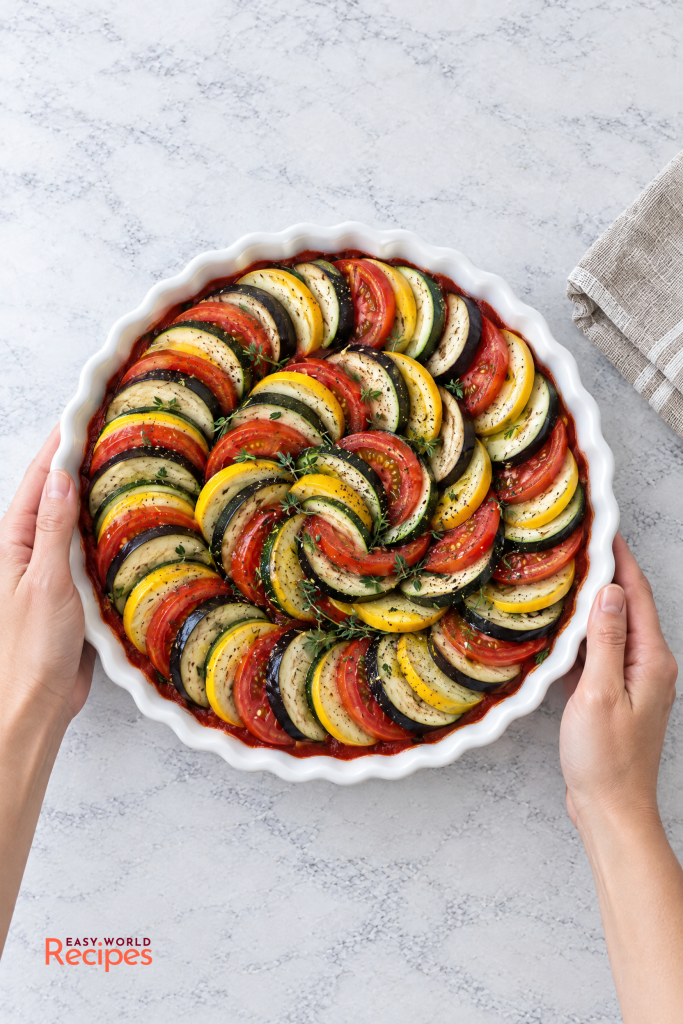
The layered spiral version is the one you see in my photos. The vegetables are cut into thin slices and arranged neatly over a tomato base before baking. It looks beautiful on the table, so I really love this version when I’m cooking for friends or family.
The texture is also a little different. Because the vegetables stay in slices, you can taste each one more clearly. The top becomes lightly roasted while the vegetables underneath turn soft and juicy.
The traditional Provençal version is much more rustic. Instead of layering the vegetables, you cut them into pieces and cook them separately before bringing everything together in one pan. This lets each vegetable brown properly instead of releasing all of its water at once.
The stew version takes a little more hands-on cooking, but the flavor becomes deeper and richer as everything slowly comes together.
If presentation is important, I would choose the layered version. It’s colorful, beautiful, and makes a lovely centerpiece.
If you want the more traditional French method, choose the stovetop stew. It doesn’t look quite as perfect, but it has that simple, home-cooked feeling that I really love.
There really isn’t a wrong choice. They use almost the same summer vegetables, but the final dishes are quite different.
For the graphic: Place the “Ratatouille, Two Ways” graphic directly underneath this section.
Why I Love This French Ratatouille Recipe?
Ratatouille is one of my favorite vegetable dishes because you really get to taste the vegetables. Nothing is hidden under a heavy sauce. Tomatoes, zucchini, eggplant, peppers, herbs, and olive oil do most of the work.
I also love how flexible it is. You can serve it warm, at room temperature, or even cold the next day. The layered version looks beautiful for guests, while the traditional stew is perfect when you want something simple and comforting.
Neither version is difficult. They just use slightly different methods, and I’ll walk you through both.
Traditional French Ratatouille Recipe Highlights
Healthy and delicious – Naturally this dish is vegan and gluten free, and is full of nutrients and Mediterranean flavors.
Easy to serve – Yoy can enjoy ratatouille as a light main course with bread or serve it as a side dish with meats or fish.
Simple recipe – This simple recipe gets you the perfect results every time.
What Are the Traditional Ingredients for Ratatouille?
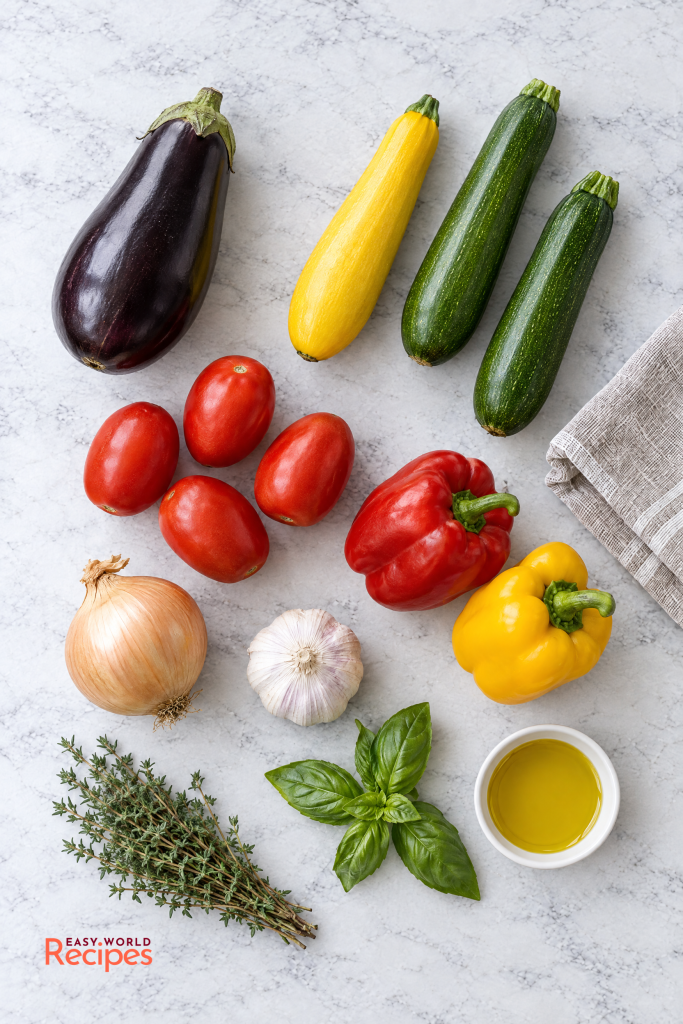
Traditional ratatouille from Nice is made with very simple summer vegetables.
The classic combination includes:
- Eggplant
- Zucchini
- Bell peppers
- Tomatoes
- Onion
- Garlic
- Olive oil
- Fresh herbs
That simple list is really the heart of the dish. When the vegetables are ripe and full of flavor, you don’t need to add very much.
You will find many modern ratatouille recipes that include other ingredients, and that is completely fine. Carrots, mushrooms, celery, cheese, meat, and stock can all be added depending on the recipe, but they are not part of the classic Niçoise version.
I use carrots in the tomato base of my layered ratatouille because I like the little bit of natural sweetness they add. They are my own addition, though, rather than a traditional ratatouille ingredient.
If you want to keep the recipe closer to the classic version, you can simply leave the carrots out.
Key Ingredients for Layered Ratatouille
Tomatoes: Use ripe, juicy tomatoes for the best flavor. They are the base of the dish and add a natural sweetness. If possible use tomatoes when they are in season – they give the best taste! For this recipe i used a large can of crushed tomatoes and 4 large Roma tomatoes.
Zucchini: Fresh zucchini adds a slightly sweet element to the ratatouille. Slice them evenly for the best even cooking.
Eggplant: Choose firm eggplants. Their texture complements the other vegetables very well and absorbs the flavors.
Bell Peppers: A mix of red, yellow, and green bell peppers adds color and a slight sweetness. They also provide a nice crunch.
Onions: Yellow onions are ideal. They add a savory depth of flavor to the dish.
Carrots: I add shredded carrots to my tomato base because they bring a little natural sweetness. Carrots are not part of traditional Niçoise ratatouille, so you can leave them out if you prefer.
Garlic: Fresh garlic cloves add a robust aroma and enhance the overall flavor.
Herbs: Fresh thyme and basil are traditional. They infuse the dish with a fragrant, earthy note.
Olive Oil: Extra virgin olive oil is essential. It adds richness and helps to sauté the vegetables to perfection. Use high quality olive oil for the best results!
Should You Salt the Aubergine First?
You may have seen older recipes telling you that you always need to salt aubergine before cooking it.
You can, but you don’t always have to.
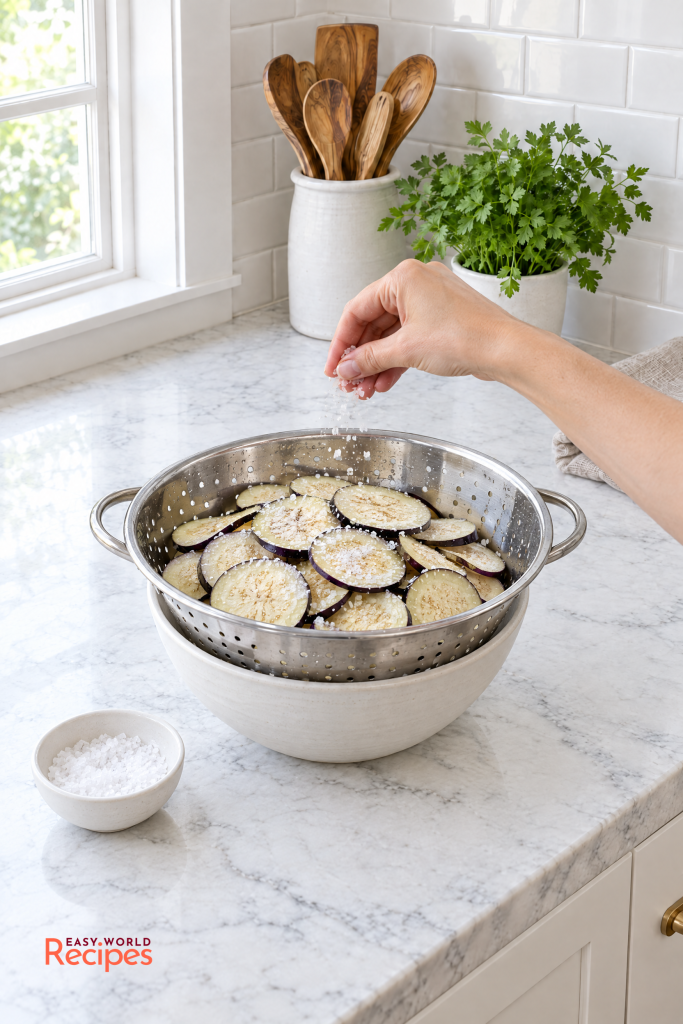
If your aubergine is large or you want to remove some extra moisture, cut it first, sprinkle it lightly with salt, and place it in a colander for about 20 to 30 minutes.
You will notice little drops of water forming on the surface. Pat the pieces dry with paper towels before cooking.
Salting can help the aubergine release some moisture, and it can also stop it from soaking up quite as much oil when you fry it.
Modern aubergines are usually much less bitter than older varieties, though. If yours is young, firm, and fresh, you can normally skip this step.
For my layered ratatouille, I usually choose a fresh, firm aubergine and simply slice it thinly.
For the traditional stovetop version, salting is more useful because the aubergine is browned in olive oil before everything is mixed together.
How to Make Layered French Ratatouille
This traditional Ratatouille recipe is simple and delicious. When slowly cooking the vegetables the release their natural sweetness and all of the vegetables infuse with flavors.
Step 1: Prepare the vegetables
- Preheat the oven to 375°F (190°C).
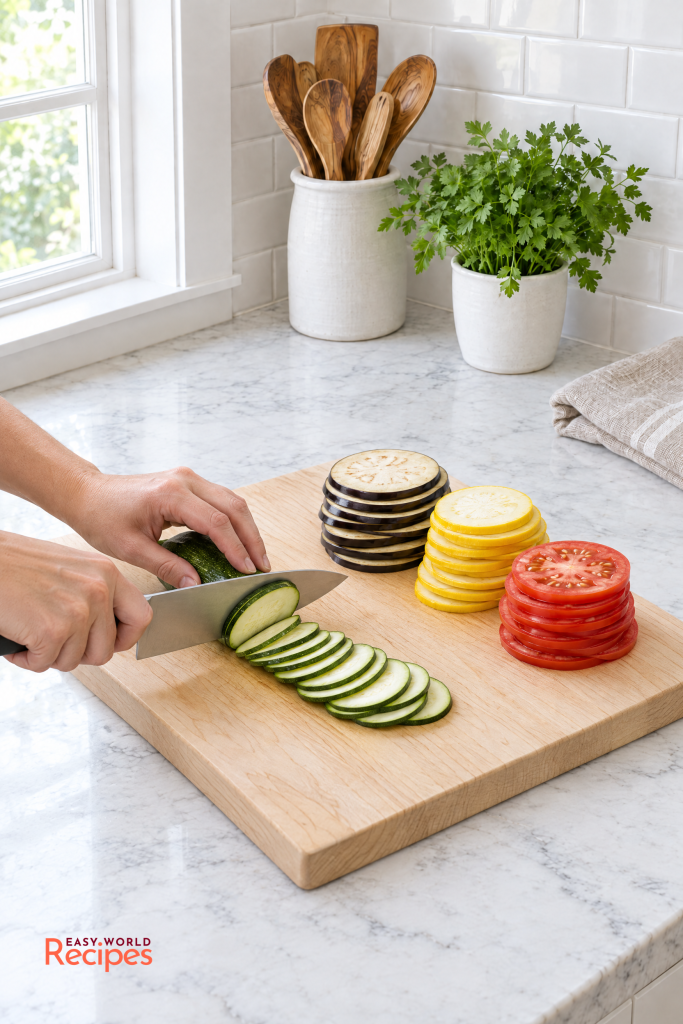
- Prep the vegetables – Slice the tomatoes, shred the carrots and chop onions, then thinly slice the zucchini, eggplant and bell peppers into even pieces.
Step 2: Sauté the base
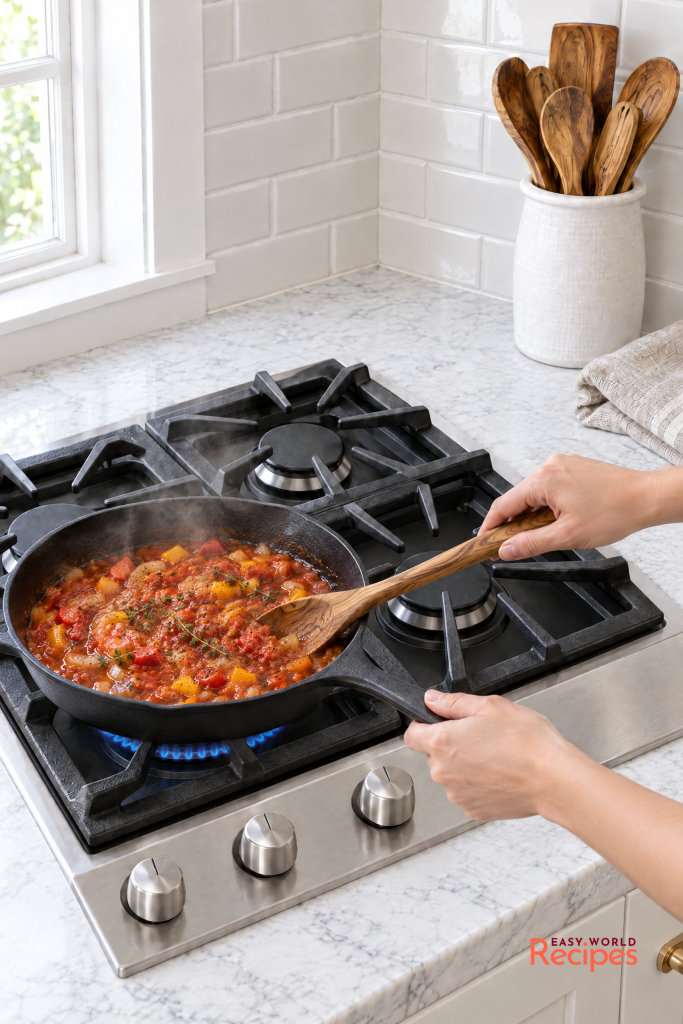
- Heat the olive oil – In a large pan, warm 2 tablespoons of olive oil on medium heat.
- Cook the carrots, onions and garlic – Sauté the shredded carrots and chopped onions until they turn soft and translucent (about 5 minutes). Add the minced garlic and cook for 1 more minute, but be careful not to burn it. Add crushed tomatoes. Season with salt and pepper, thyme and basil.
Step 3: Layer the vegetables
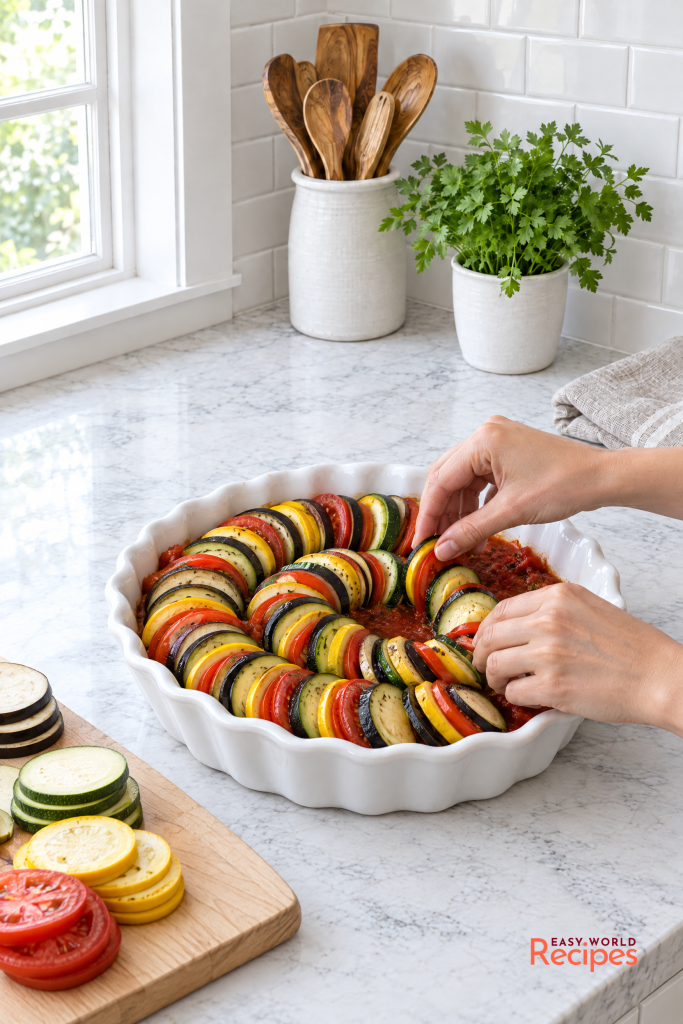
- Arrange in a baking dish – Spread the sautéed onion and garlic mixture at the bottom of a baking dish.
- Create layers – Arrange the sliced tomatoes, zucchini, eggplant, and bell peppers in a circular pattern switching the vegetables for a classic ratatouille look.
- Season – Drizzle the dish with the remaining olive oil and then sprinkle it with salt, pepper, and fresh thyme leaves.
Step 4: Bake
- Cover and bake – Cover the dish with aluminum foil and bake for 45 minutes. The vegetables will soften and release their flavors.
- Caramelize the vegetables – Remove the foil and bake for an additional 15 minutes until the top is slightly golden and caramelized.
Step 5: Serve and enjoy
Let it Rest – Allow the ratatouille to rest for a few minutes before serving.
Garnish & Serve – Sprinkle with fresh chopped basil and drizzle with the pan juices. Serve warm, cold, or at room temperature!
Made this ratatouille? Leave a star rating below — it really helps other cooks find the recipe.
Why Cook the Vegetables Separately?
If you are making traditional stewed ratatouille, cooking the vegetables separately makes a big difference.
Eggplant, zucchini, peppers, and onions do not all cook at the same speed. They also contain different amounts of water.
If you put everything into one crowded pan at the same time, the vegetables release a lot of moisture. Instead of browning in the olive oil, they begin to steam.
The zucchini can become very soft before the peppers are ready, and the eggplant can turn mushy while everything else is still cooking.
Cooking each vegetable separately gives you much more control. The eggplant can brown properly. The zucchini stays tender without falling apart. The peppers have enough time to soften.
Once everything is cooked, you bring it all back together with tomatoes, garlic, herbs, and olive oil.
This step is important for the traditional stewed version.
For the layered ratatouille above, you do not need to cook every sliced vegetable separately. The tomato sauce is prepared first, and then the vegetables slowly cook together in the oven.
How to Make Traditional Provençal Ratatouille on the Stovetop
If you want to make ratatouille in the more traditional Provençal style, this is the method I would use.
Instead of arranging thin slices in a baking dish, the vegetables are cut into pieces, cooked separately, and then gently simmered together.
1. Salt the aubergine
Cut the aubergine into bite-size pieces and place it in a colander.
Sprinkle lightly with salt and leave it for about 20 to 30 minutes. Pat it very well with paper towels before cooking.
2. Brown the aubergine
Heat a little olive oil in a wide pan over medium-high heat.
Add the aubergine in a single layer and cook for about 3 to 4 minutes, turning as needed, until lightly browned.
Move it to a plate.
3. Cook the zucchini
Add another small drizzle of olive oil if the pan looks dry.
Cook the zucchini for about 3 to 4 minutes. You want it lightly browned but still holding its shape.
Remove it and place it with the aubergine.
4. Cook the onion
Add the chopped onion to the pan and cook for about 4 to 5 minutes, until it begins to soften.
5. Add the peppers
Add the bell peppers and cook for another 3 to 4 minutes.
They should start to soften but do not need to be completely cooked yet.
6. Add tomatoes and garlic
Add the fresh tomatoes and garlic.
Cook for about 1 to 2 minutes, just until the garlic smells fragrant and the tomatoes begin to soften.
If you like, you can add a small splash of dry white wine at this point and let it cook for a minute.
7. Bring everything together
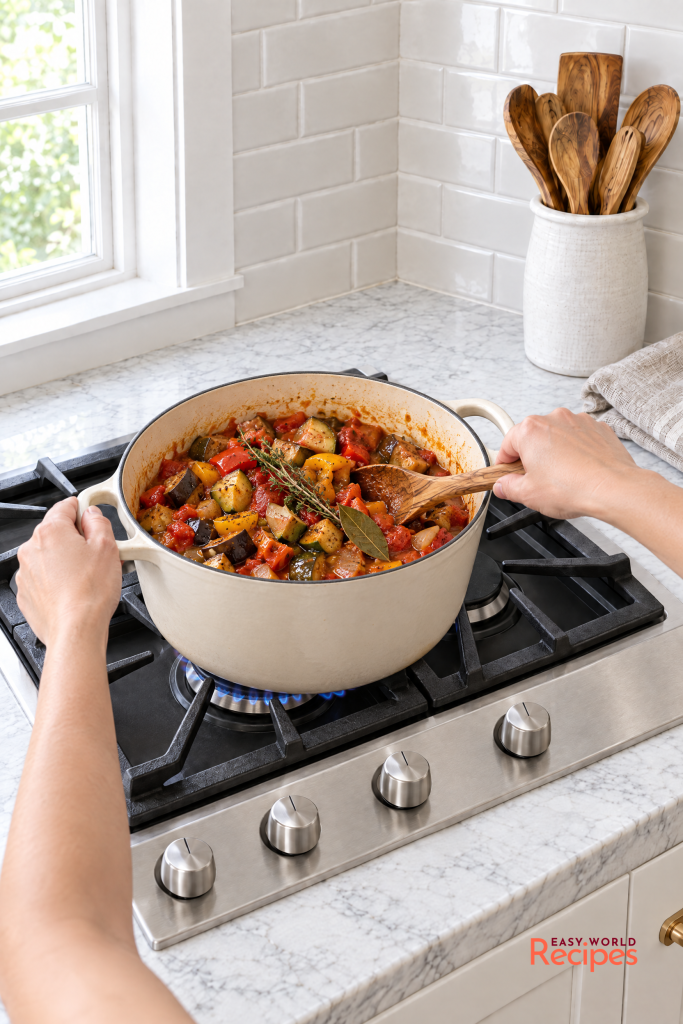
Add the crushed or tinned tomatoes, fresh thyme, and a bay leaf.
Return the cooked aubergine and zucchini to the pan.
Season with salt and pepper and gently stir everything together.
8. Simmer
Let the ratatouille simmer uncovered for about 20 to 25 minutes.
Stir gently from time to time, but try not to break up the vegetables.
The sauce should thicken while the vegetables become tender.
9. Finish with basil
Turn off the heat.
Tear fresh basil over the top and finish with a small drizzle of good olive oil.
Taste and add a little more salt and pepper if needed.
You can serve traditional ratatouille hot, warm, or at room temperature. I actually think the flavor becomes even better after it has had a little time to sit.
How To Store?
Store any leftovers in an airtight container in the fridge for up to 3 days. Reheat gently on the stove over medium heat or enjoy it cold as part of a salad.
You can also reheat it in the oven in 300°F. Put it in a baking dish, and cover it with a lid or aluminum foil, and place in the oven for about 20 minutes. I also recommend adding a little bit of water to the dish to prevent it from drying it out.
The traditional stewed version also freezes very well. Let it cool completely, then freeze it in portions for up to 3 months. The baked layered version is better eaten fresh or kept in the refrigerator because the thin vegetable slices can become very soft after freezing and thawing.
What Do the French Serve with Ratatouille?
Ratatouille can be a main dish, a side dish, or even a simple starter. In Provence, it works especially well beside grilled or roasted meat. Lamb and chicken are both lovely with it, and I also like it with a simple piece of firm white fish.
Make sure you have some crusty bread on the table too. A warm homemade French baguette is perfect for soaking up all of the tomato, olive oil, and vegetable juices left on the plate.
Ratatouille can also be served on its own. For a light lunch, I like it warm or at room temperature with bread. You can also put a fried or poached egg on top if you want something a little more filling.
If you want to turn it into a bigger vegetarian meal, serve it with rice, creamy polenta, or pasta.
One of the nicest things about ratatouille is that it does not need to be served piping hot. It tastes good hot, warm, at room temperature, and even cold from the fridge the next day.
Make It a French Menu
If you want to turn ratatouille into a full French meal, you have lots of options.
You could start with a Salade Niçoise, which comes from the same part of France.
For the main meal, serve your ratatouille beside French Roast Chicken (Poulet Rôti). You could also make it part of a larger Provençal dinner with Beef Daube or Bouillabaisse.
A French Potato Salad also works nicely for a summer meal because both dishes can be served around room temperature.
And if you want dessert, finish with Tarte Tatin or French Apple Cake.

Expert Tips for the Best Ratatouille
Same size Slicing: Slice the vegetables in the same size to get even cooking. I like to use a mandolin for this.
Layering Technique: For a beautiful presentation, layer the sliced vegetables in a circular pattern in the baking dish. This also makes even cooking and flavor distribution.
Slow Cooking: Cook the ratatouille slowly to allow the flavors to blend together. This low and slow method enhances the depth of flavor.
Substitutions and Variations
Ratatouille is very easy to change once you know the basic recipe. These additions are not part of traditional Niçoise ratatouille, but you can use them if you want to make the dish your own.
- For a heartier version, you can add slices of potatoes to the mix. This adds bulk to the dish and gives a different texture.
- If you prefer a protein rich version add cooked chickpeas or white beans.
- For a slightly different flavor profile, you can use mushrooms. They add an earthy note to the dish.
- If you want to experiment with different herbs, rosemary and parsley can be excellent substitutes. Feel free to add your favorite herbs and spices to fully personalize this dish!
Ratatouille, Tian and Confit Byaldi: What’s the Difference?
This is probably the most confusing part about ratatouille because several similar dishes often get called by the same name.
Ratatouille
Traditional ratatouille from Nice is a rustic vegetable stew.
The vegetables are usually cut into pieces, cooked separately, and then brought together with tomatoes, garlic, olive oil, and herbs.
It is not usually arranged in perfect circles.
Tian
A tian is a Provençal baked vegetable dish.
The vegetables are thinly sliced, arranged in a baking dish, and slowly roasted together.
That makes it much closer to the layered recipe you see in my photos.
Confit Byaldi
Confit byaldi is another layered vegetable dish.
The version that became especially famous was created by chef Thomas Keller for the 2007 movie Ratatouille. That beautiful spiral of very thin vegetables is one of the reasons so many people now picture layered vegetables when they hear the word ratatouille.
So if you came here because you wanted to make “the ratatouille from the movie,” the layered recipe above is the style you are looking for.
Ratatouille vs Caponata
Caponata may look a little like ratatouille, but it is a different dish.
Ratatouille comes from France, while caponata comes from Sicily.
Caponata usually includes celery and has a sweet and sour flavor from ingredients such as vinegar and sugar.
Ratatouille is much more focused on the simple flavor of summer vegetables, olive oil, garlic, tomatoes, and herbs.
When Is Ratatouille Season?
Ratatouille is really a summer dish.
The best time to make it is usually from July through September, when eggplant, zucchini, peppers, and tomatoes are all in season at the same time.
That is one of the reasons these vegetables work so well together.
When you shop for eggplant, choose one that feels heavy for its size and has smooth, tight skin.
For zucchini, I prefer smaller ones. Very large zucchini can contain much more water and may become soft while cooking.
Choose peppers that feel firm and have smooth, tight skin.
For tomatoes, use the ripest ones you can find. I always like to smell them near the stem. A good ripe tomato should actually smell like a tomato.
Ratatouille is a very simple recipe, so the quality of the vegetables really matters. When everything is ripe and in season, you need very little to make the dish taste good.
FAQs
Can I make ratatouille ahead of time?
Yes, ratatouille can be made a day ahead and reheated gently before serving. In fact, the flavors often improve after a day as they have more time to blend together.
How can I make ratatouille without an oven?
You can cook ratatouille on the stove by sautéing the vegetables individually until tender and then combining them in a large pot to simmer together with herbs and seasoning.
What’s the secret to good ratatouille?
Use fresh vegetables, don’t overcrowd the pan, and avoid cooking everything until it turns mushy. For the stewed version, cooking the vegetables separately helps them brown and keep better texture.
What do the French serve with ratatouille?
Ratatouille is often served with roast or grilled chicken, lamb, fish, and crusty bread. It can also be eaten on its own or served with rice, polenta, pasta, or an egg.
Why is my ratatouille watery?
The vegetables probably released too much moisture at once. Cook in batches, avoid overcrowding the pan, and let the ratatouille simmer uncovered so the extra liquid can cook away.
Do I need to peel the aubergine?
No, you usually don’t need to peel it. The skin softens while cooking and helps the aubergine pieces hold their shape.
Is ratatouille supposed to be mushy?
No. The vegetables should be soft and tender, but you should still be able to see and taste the different vegetables. Traditional ratatouille is rustic, so it does not need to look perfect. But the zucchini, eggplant, and peppers should not completely disappear into the sauce. Cooking the vegetables separately helps them keep a much better texture.
Is ratatouille eaten hot or cold?
You can eat ratatouille hot, warm, at room temperature, or cold.
I love it warm when it is freshly made, but it is also very good the next day after all of the flavors have had time to sit together. Cold leftover ratatouille with crusty bread also makes a really easy summer lunch.
Can you freeze ratatouille?
The traditional stewed version freezes very well. Let it cool completely, divide it into portions, and freeze it for up to 3 months. The layered baked version does not freeze as well because the thin vegetable slices can become very soft after thawing. For the layered version, I prefer keeping leftovers in the refrigerator and eating them within a few days.
Is ratatouille a main dish or a side dish?
It can be both. Ratatouille is often served as a vegetable side dish with meat or fish, but it can easily become a light main course too. Serve it with crusty bread, rice, pasta, or polenta, or put a fried or poached egg on top for a more filling meal.
Layered French Ratatouille Recipe
- Total Time: 1 hour 20 minutes
- Yield: 6 1x
Description
French Ratatouille is a classic dish that has fresh vegetables like tomatoes, zucchini, eggplant, and bell peppers. This traditional ratatouille recipe is both healthy and flavorful. It is a perfect side dish or a light main course.
Ingredients
- 4 ripe tomatoes, chopped
- 2 zucchini, sliced
- 1 large eggplant, sliced
- 1 red bell pepper, sliced
- 1 yellow bell pepper, sliced
- 1 green bell pepper, sliced
- 1 large yellow onion, chopped
- 4 cloves garlic, minced
- 10 oz crushed tomatoes
- 2 large carrots, optional
- 3 tbsp extra virgin olive oil
- 2 sprigs fresh thyme
- 1/4 cup fresh basil leaves, chopped
- Salt and pepper to taste
Instructions
- Prepare the Vegetables: Preheat your oven to 375°F (190°C). Wash thoroughly, chop and slice all the vegetables into small sizes.
- Sauté the Onions, Carrots and Garlic: In a large skillet, heat 2 tablespoons of olive oil over medium heat. Add the chopped onions and shredded carrot and cook until translucent, about 5 minutes. Add the minced garlic and cook for another minute. Be careful not to burn the garlic. Add crushed tomatoes and season with salt, pepper some thyme and basil.
- Layer the Vegetables: In a large baking dish, spread the sautéed onions, carrots and garlic evenly on the bottom. Arrange the sliced tomatoes, zucchini, eggplant, and bell peppers on top in a circular pattern, alternating the vegetables. I always like to make little stacks of vegetables, and than lay them down in the baking dish, wich makes it easier.
- Season and Add Herbs: Drizzle the remaining olive oil over the vegetables. Sprinkle with salt, pepper, and fresh thyme leaves. Cover the dish with aluminum foil.
- Bake: Bake in the preheated oven for about 45 minutes, until the vegetables are tender (The time might vary depending on the thickness of vegetables and the power of the oven). Remove the foil and bake for an additional 15 minutes to allow the vegetables to caramelize slightly.
- Serve: Remove from the oven and let the ratatouille rest for a few minutes. Garnish with fresh basil leaves before serving. Enjoy it hot, drizzled with the juices form baking!
Notes
Herb Variations: Experiment with other fresh herbs like rosemary or oregano for a different flavor profile. You can also add a bay leaf during baking for extra aroma.
Additional Vegetables: Add other vegetables such as sliced mushrooms or squash for added variety and flavor.
Carrots are my own addition to the layered tomato base because I like the little sweetness they add. They are not part of traditional Niçoise ratatouille, so feel free to leave them out.
- Prep Time: 20 minutes
- Cook Time: 1 hour
- Category: Main dish
- Cuisine: French
Nutrition
- Calories: 170
- Fat: 7g
- Carbohydrates: 15g
- Protein: 3
Made this? Leave a star rating below — it really helps other cooks find the recipe.
Nutrition information
This website gives estimated nutritional information, which might change depending on the ingredients used.