Description
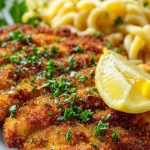
This authentic Pork Schnitzel recipe (Schweineschnitzel) features thin pork cutlets coated in flour, egg, and fine breadcrumbs before being pan-fried until beautifully golden and crisp. With two simple traditional techniques—leaving the breadcrumbs loose and gently swirling the pan—you can create the light, puffy crust that makes German schnitzel so famous.
Ingredients
Units
Scale
- 4 boneless pork chops (about 1 1/2 pounds / 680 g)
- 1 teaspoon salt, or to taste
- 1/2 teaspoon freshly ground black pepper
- 1/2 cup (60 g) all-purpose flour
- 2 large eggs, beaten
- 1 1/2 cups (150 g) plain fine breadcrumbs (or panko if you prefer a crunchier coating)
- Neutral frying oil (enough for 1/4-1/2 inch in the skillet)
- 2 tablespoons butter
- 1–2 lemons, cut into wedges
- Fresh parsley, chopped, for serving
Instructions
- Prepare the pork. Place each pork chop inside a freezer bag or between two sheets of plastic wrap. Gently pound the meat until it is about ¼ inch (6 mm) thick. Try to keep the thickness even so every part cooks at the same speed. If your pork chops are especially thick, butterfly them first before pounding. Pat the pork dry with paper towels, then season both sides generously with the salt and black pepper. Seasoning the meat instead of only the flour gives the finished schnitzel much better flavor.
- Set up the breading station. Place the flour into one shallow bowl, the beaten eggs into a second bowl, and the fine breadcrumbs into a third bowl. Arrange the bowls in order so you can move easily from flour to egg to breadcrumbs without making a mess. Having everything ready before frying helps the coating stay light and keeps the cooking process smooth.
- Coat the schnitzel. Lightly coat one pork cutlet in the flour and shake off any excess. Dip it into the beaten eggs, making sure every part is covered, then lift it up and allow the extra egg to drip away for a few seconds. Finally, lay the pork gently into the breadcrumbs and lightly cover both sides. Do not press the breadcrumbs into the meat. The loose coating is one of the biggest secrets to creating authentic German schnitzel with a puffy, wavy crust.
- Heat the oil. Pour enough neutral oil into a large skillet to create about ¼–½ inch of depth, then add the butter. Heat over medium until the oil reaches about 330°F (165°C). If you do not have a thermometer, drop in a small breadcrumb. It should sizzle immediately without burning. The butter should foam gently but should not become dark brown.
- Fry the first side. Carefully place one schnitzel into the hot oil. It should almost float instead of sitting flat on the bottom of the pan. As it cooks, gently swirl or shake the pan every few seconds so hot oil flows over the top of the schnitzel. This simple movement helps the loose coating puff away from the meat and creates the signature wavy crust. Fry for 2–3 minutes until deep golden brown.
- Turn carefully. Flip the schnitzel only once using tongs or a thin spatula. Continue frying for another 2–3 minutes until the second side is crisp, evenly browned, and the pork reaches an internal temperature of 145°F (63°C). Avoid pressing down on the schnitzel while it cooks, as this can flatten the delicate coating.
- Drain properly. Transfer the cooked schnitzel to a wire rack set over a baking sheet. Resting on a rack instead of paper towels allows air to circulate underneath, preventing steam from softening the crispy crust. Lightly sprinkle with a little extra salt while still hot if desired.
- Repeat with the remaining pork. Allow the oil to return to the proper temperature before adding the next schnitzel. Frying in oil that is too cool can make the coating greasy instead of crisp. Continue until all four schnitzels are cooked.
- Serve immediately. Garnish with chopped fresh parsley and plenty of lemon wedges. Squeeze fresh lemon juice over each schnitzel just before eating. The bright citrus cuts through the richness of the crispy coating and is an essential part of serving authentic German Schweineschnitzel.
Notes
- Fine breadcrumbs create the most authentic German schnitzel texture, while panko gives a crunchier, less traditional coating.
- Bread the pork immediately before frying. Letting it sit allows the egg to soften the breadcrumbs and prevents the coating from puffing.
- The two most important techniques are never pressing the breadcrumbs onto the meat and gently swirling the pan while frying. Together, they create the signature light, rippled crust found in traditional German restaurants.
- A wire rack is much better than paper towels for resting fried schnitzel because it keeps the coating crisp on every side.
- Leftovers reheat best in a 375°F (190°C) oven or air fryer. Avoid the microwave if you want to keep the coating crispy.
- Prep Time: 15 minutes
- Cook Time: 15 minutes
- Category: Main dish
- Cuisine: German
Nutrition
- Calories: 420
- Sugar: 1 g
- Sodium: 620 mg
- Fat: 23 g
- Saturated Fat: 6 g
- Carbohydrates: 20 g
- Fiber: 1 g
- Protein: 32 g