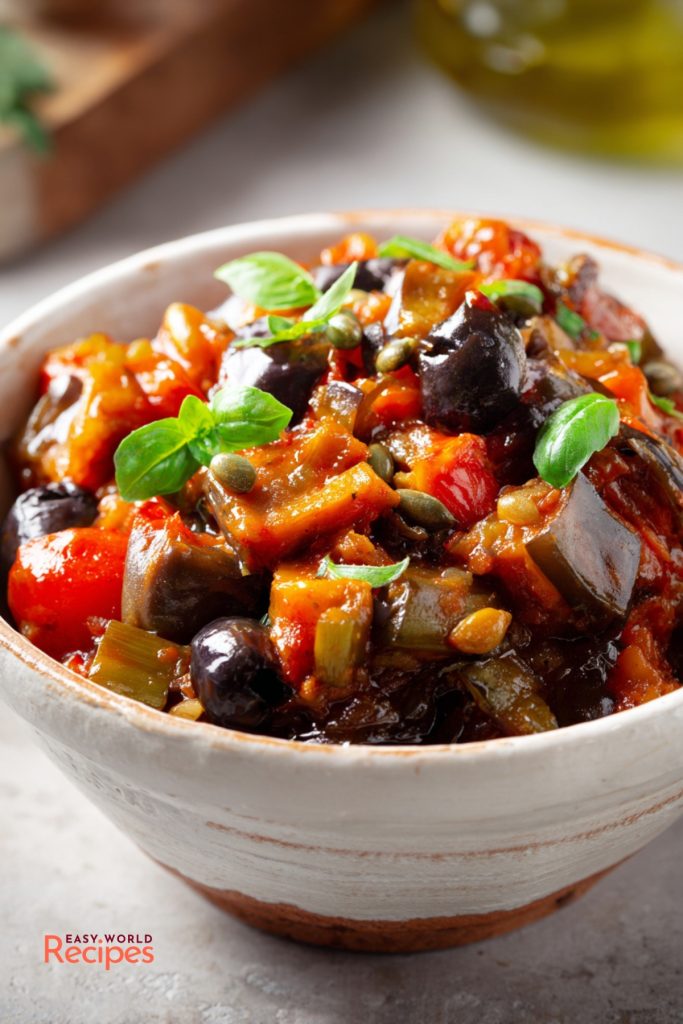
Caponata is one of the most loved dishes from Sicily, and once you taste it, it is easy to understand why. This famous sweet and sour eggplant dish combines tender vegetables, briny olives, salty capers, and a rich agrodolce sauce that creates an unforgettable flavor. Every bite feels comforting, fresh, and deeply traditional.
This authentic Sicilian caponata recipe is simple enough for home cooks but tastes like something served in a small family trattoria in Palermo. It works beautifully as an appetizer, side dish, topping, or light meal. If you love Mediterranean flavors and rustic Italian cooking, this dish deserves a place in your kitchen.
One of the best things about caponata is that it tastes even better after resting for a few hours or overnight. That makes it perfect for entertaining, meal prep, and anyone following a healthy Mediterranean diet. You can serve it warm, cold, or at room temperature, making it one of the most versatile Sicilian recipes you can make at home.
Why You’ll Love This Caponata
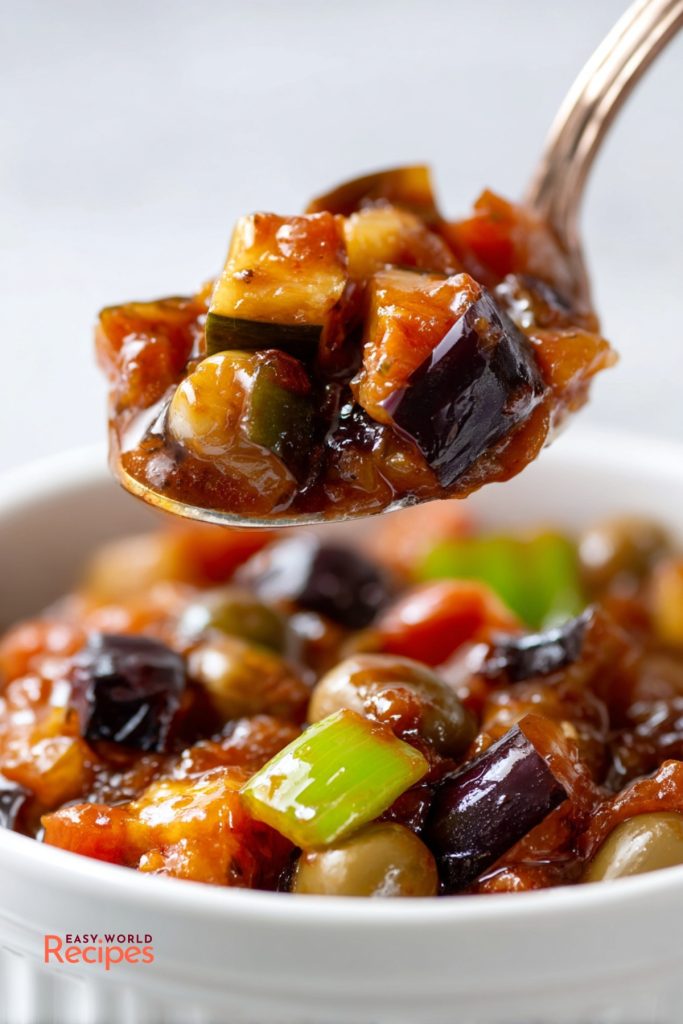
This traditional caponata recipe is packed with bold Mediterranean flavor while still using simple ingredients you can easily find in most grocery stores. The eggplant becomes soft and silky, the celery adds freshness, and the olives and capers create a salty contrast that perfectly balances the sweet and sour sauce. The result is rich, savory, bright, and incredibly satisfying.
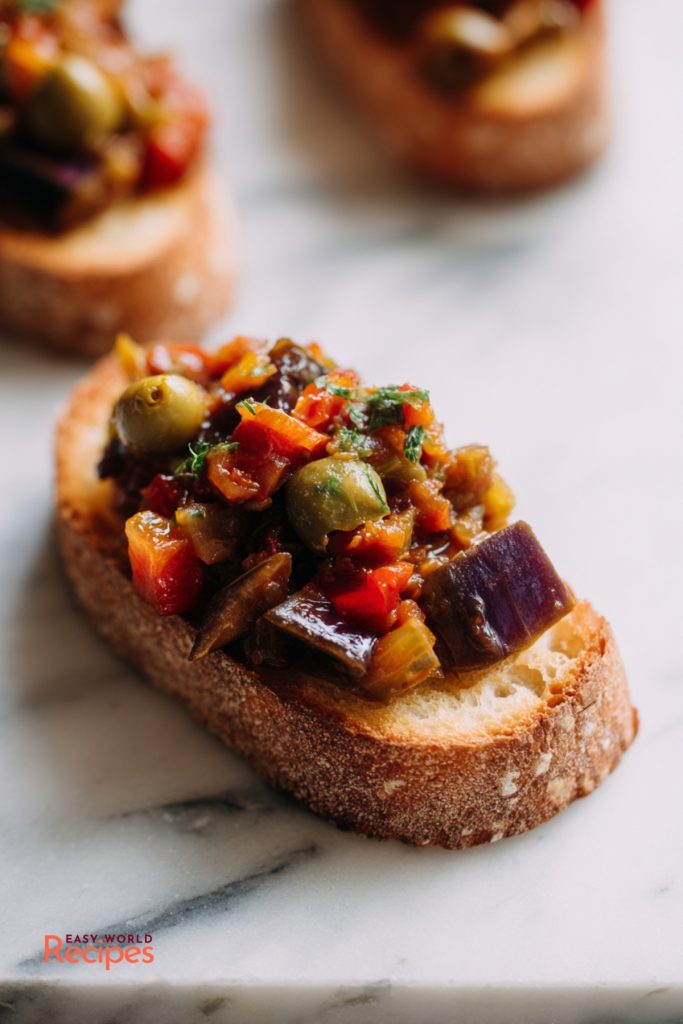
Another reason to love this Sicilian caponata is how versatile it is. You can spoon it onto toasted bread, serve it beside grilled fish or chicken, add it to antipasto platters, or even use it as a pasta topping. It also works wonderfully for make-ahead meals because the flavors continue developing as it rests in the fridge.
This recipe is also beginner-friendly. Even though caponata has deep Italian roots, the cooking process is simple and approachable. With a few basic cooking techniques and fresh ingredients, you can create a truly authentic sweet and sour eggplant dish right at home.
What Is Caponata?
Caponata is a traditional Sicilian eggplant dish made with vegetables cooked in a sweet and sour sauce known as agrodolce. The main ingredient is eggplant, but celery, tomatoes, olives, capers, onions, and vinegar are also essential parts of the recipe. The vegetables are slowly cooked until soft and flavorful, then balanced with sugar and vinegar for that classic sweet-and-sour taste.
In Sicily, caponata is often served as an appetizer, side dish, or part of an antipasto spread. It is especially popular during warm weather because it can be served cold or at room temperature. Families across Sicily have their own regional versions, and some include pine nuts, raisins, seafood, or peppers.
The word “caponata” likely comes from the Sicilian word “capon,” referring to a fish once served with sweet and sour sauces. Over time, eggplant became the more affordable and widely used ingredient. Today, caponata is one of the most famous dishes in Sicilian cuisine alongside classics like eggplant parmigiana.
If you enjoy traditional Mediterranean cooking, this dish is one of the best introductions to authentic Sicilian recipes.
Necessary Equipment
- Large skillet or sauté pan
- Sharp knife
- Cutting board
- Wooden spoon
- Large mixing bowl
- Colander
- Measuring cups and spoons
- Baking sheet or paper towels for draining eggplant
- Small bowl for vinegar mixture
Key Ingredients & Substitutions
Eggplant: Use 2 medium eggplants, about 2 pounds total, cut into cubes. Italian eggplants work best because they are less bitter and have fewer seeds.
Olive oil: Use 6 tablespoons extra virgin olive oil for authentic Mediterranean flavor. You can use avocado oil if needed.
Celery: Use 2 celery stalks, sliced thinly for freshness and crunch. This ingredient is traditional in Sicilian caponata.
Yellow onion: Use 1 medium onion, finely chopped for sweetness and depth. White onions also work well.
Garlic: Use 3 garlic cloves, minced for savory flavor.
Crushed tomatoes: Use 1 cup canned crushed tomatoes or fresh peeled tomatoes during summer.
Green olives: Use 1/2 cup sliced green olives for salty richness. Castelvetrano olives are especially authentic.
Capers: Use 2 tablespoons capers, rinsed well to remove excess salt.
Red wine vinegar: Use 1/4 cup for the classic agrodolce flavor.
Sugar: Use 2 tablespoons granulated sugar to balance the vinegar and create the sweet-and-sour taste.
Pine nuts: Use 2 tablespoons toasted pine nuts for texture and authentic Sicilian flavor. Walnuts can work as a substitute.
Fresh basil: Use 1/4 cup chopped basil for freshness at the end.
Salt and black pepper: Season to taste throughout the cooking process.
Optional raisins: Use 2 tablespoons golden raisins if you enjoy a sweeter traditional variation.
How to Make Caponata
- Prepare the eggplant: Cut the eggplant into even cubes and sprinkle lightly with salt. Let it rest in a colander for 30 minutes to remove excess moisture and bitterness. Pat dry thoroughly before cooking.
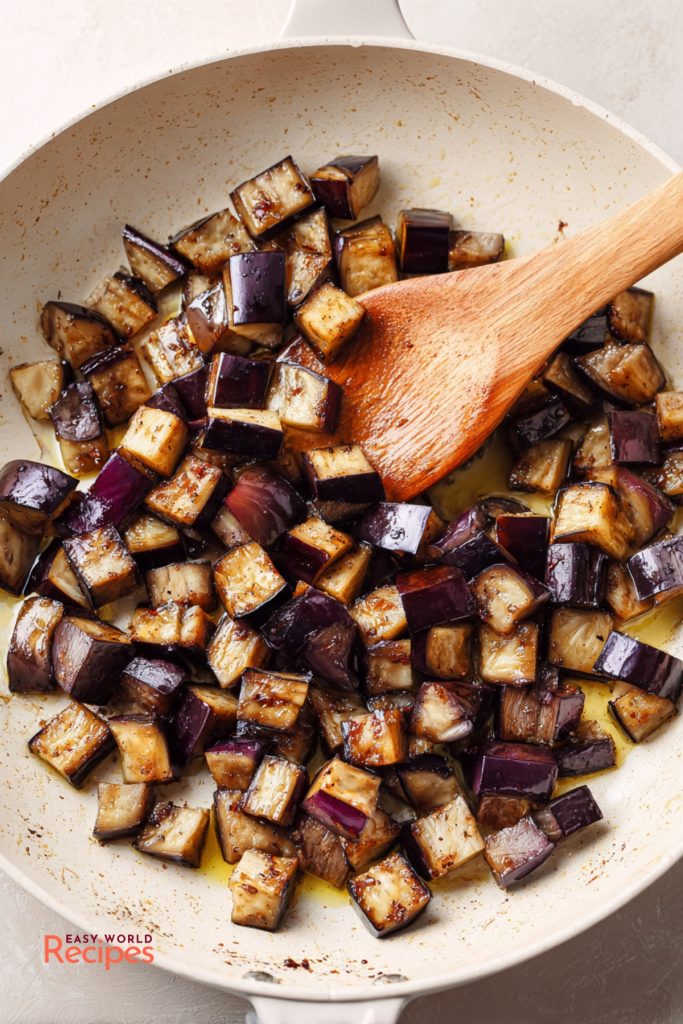
- Cook the eggplant: Heat 4 tablespoons olive oil in a large skillet over medium-high heat. Add the eggplant in batches and cook until golden brown and soft. Transfer to a plate lined with paper towels.
- Sauté the onion and celery: Add the remaining olive oil to the skillet. Cook the onion and celery for about 6 to 8 minutes until soft and lightly golden.
- Add garlic: Stir in the minced garlic and cook for about 30 seconds until fragrant. Do not let it burn.
- Cook the tomatoes: Add the crushed tomatoes and cook for 5 minutes until slightly thickened and rich.
- Add olives and capers: Stir in the olives, capers, and optional raisins. Mix well so the flavors combine evenly.
- Make the agrodolce sauce: In a small bowl, combine the vinegar and sugar. Stir until the sugar dissolves completely.
- Combine everything: Return the cooked eggplant to the skillet and pour in the vinegar mixture. Stir gently to coat all the vegetables evenly.
- Simmer slowly: Reduce the heat to low and simmer for 10 to 15 minutes. The vegetables should become tender while the sauce thickens slightly.
- Finish and rest: Stir in basil and toasted pine nuts. Taste and adjust seasoning if needed. Let the caponata cool for at least 30 minutes before serving for the best flavor.
Tips for the Best Caponata
- Salt the eggplant first: This helps remove excess moisture and improves texture while reducing bitterness.
- Cook the eggplant in batches: Overcrowding the pan can make the eggplant steam instead of brown properly.
- Balance the agrodolce carefully: Taste the vinegar and sugar balance before serving. Some people prefer a sweeter caponata while others like it more tangy.
- Let it rest before serving: Caponata becomes more flavorful after several hours in the fridge because the ingredients absorb the sauce.
- Use quality olives and capers: Since these ingredients add most of the salty flavor, better-quality ingredients create a noticeably better result.
- Toast the pine nuts lightly: This small step adds more depth and nuttiness to the dish.
Variations and Substitutions
Sicilian caponata has many regional variations throughout Italy. Some versions include red bell peppers for sweetness, while others add zucchini or carrots for extra vegetables.
For a more traditional Palermo-style caponata, add golden raisins and extra pine nuts. The sweet ingredients highlight the classic agrodolce flavor even more.
If you prefer a lighter version, roast the eggplant in the oven instead of frying it. Simply toss the cubes with olive oil and roast at 425°F until golden and tender.
You can also make this dish completely vegan and gluten-free without any changes because the classic recipe naturally fits both diets.
Serving Suggestions
Caponata is one of the most versatile Italian appetizers you can make. Serve it on toasted bread or crostini for an easy antipasto platter alongside other Italian appetizers. It also pairs beautifully with grilled chicken, roasted fish, or lamb.
This sweet and sour eggplant dish can also be spooned over creamy ricotta, Stracciatella Cheese or burrata for a more elegant presentation. Some people even enjoy it with pasta, rice, or couscous for a light Mediterranean-style meal.
For a full Sicilian-inspired dinner, serve caponata alongside seafood, grilled vegetables, and rustic bread. It also fits perfectly into a Mediterranean diet meal plan because it is packed with vegetables and olive oil.
Make-Ahead and Storage
Fridge: Store caponata in an airtight container in the refrigerator for up to 5 days. The flavor actually improves after the first day.
Freezer: Freeze cooled caponata in freezer-safe containers for up to 3 months. Leave a little space at the top for expansion.
Reheating: Thaw overnight in the refrigerator if frozen. Serve cold, bring to room temperature, or warm gently in a skillet over low heat.
Make-ahead tip: Prepare caponata one full day before serving for the most authentic flavor and texture.
FAQ
What is in traditional caponata?
Traditional caponata includes eggplant, celery, onions, tomatoes, olives, capers, olive oil, vinegar, and sugar. These ingredients create the classic sweet and sour agrodolce flavor that makes Sicilian caponata unique.
How do you make the perfect caponata?
The secret to perfect caponata is properly browning the eggplant and balancing the sweet and sour sauce carefully. Letting the dish rest before serving also helps deepen the flavor.
What does caponata mean in Italian?
The name caponata likely comes from the Sicilian word “capon,” which referred to fish dishes served with sweet and sour sauces centuries ago.
What makes a caponata different from ratatouille?
Caponata has a sweet and sour agrodolce flavor from vinegar and sugar, while ratatouille is purely savory and herb-focused.
Can caponata be served cold?
Yes. In fact, many people believe Sicilian caponata tastes best cold or at room temperature after the flavors have fully developed.

Authentic Sicilian Caponata Recipe
- Total Time: 1 hour 10 minutes
- Yield: 6 servings 1x
Description
Authentic Sicilian caponata recipe with tender sweet and sour eggplant, celery, olives, capers, and rich agrodolce flavor.
Ingredients
- 2 medium eggplants (about 2 pounds / 900g), cubed
- 6 tablespoons extra virgin olive oil
- 2 celery stalks, sliced
- 1 medium yellow onion, chopped
- 3 garlic cloves, minced
- 1 cup crushed tomatoes
- 1/2 cup green olives, sliced
- 2 tablespoons capers, rinsed
- 1/4 cup red wine vinegar
- 2 tablespoons sugar
- 2 tablespoons pine nuts, toasted
- 1/4 cup fresh basil, chopped
- Salt and black pepper to taste
- Optional: 2 tablespoons golden raisins
Instructions
- Salt the eggplant carefully: Place the cubed eggplant in a colander and sprinkle generously with salt. Allow it to rest for 30 minutes so excess moisture drains away. This step helps the eggplant become creamy instead of soggy during cooking. After resting, rinse lightly and pat completely dry with paper towels.
- Brown the eggplant in batches: Heat olive oil in a large skillet over medium-high heat. Add only enough eggplant to fit in a single layer and cook slowly until deeply golden and soft on all sides. Stir occasionally but avoid moving the cubes too often so they develop proper caramelization. Transfer cooked eggplant to paper towels before repeating with remaining batches.
- Cook the aromatic vegetables: Add onion and celery to the same skillet and sauté gently for several minutes until soft and fragrant. The celery should become tender while still keeping a slight bite. Stir often to prevent browning too quickly.
- Add garlic for flavor: Stir in the minced garlic and cook briefly until aromatic. Garlic burns quickly, so keep the heat moderate and stir constantly during this step.
- Build the tomato base: Pour in the crushed tomatoes and cook until slightly thickened. The sauce should look rich and concentrated instead of watery. Stir regularly to avoid sticking.
- Add the salty ingredients: Mix in the olives, capers, and optional raisins if using. These ingredients create the traditional Sicilian flavor profile that makes caponata so distinctive.
- Prepare the agrodolce mixture: Combine red wine vinegar and sugar in a small bowl and stir until dissolved. Taste carefully to ensure the balance feels pleasantly sweet and tangy.
- Combine the vegetables: Return the eggplant to the skillet and gently fold everything together. Pour the agrodolce mixture evenly over the vegetables and stir carefully so the eggplant keeps its shape.
- Simmer slowly for deeper flavor: Reduce the heat to low and simmer for about 15 minutes. The vegetables should become soft and glossy while the sauce thickens slightly around them. Stir occasionally to keep the mixture from sticking.
- Finish with herbs and pine nuts: Add fresh basil and toasted pine nuts just before serving. Taste for seasoning and adjust with extra salt, pepper, vinegar, or sugar if needed.
- Allow the caponata to rest: For the best flavor, cool the dish completely before serving. Refrigerating overnight creates an even richer and more balanced taste.
Notes
For the best texture, avoid overcrowding the skillet while cooking the eggplant. Browning each batch properly creates a deeper and richer flavor. Caponata can be served warm, cold, or at room temperature, but many Sicilian cooks believe it tastes best the next day. High-quality olives and capers make a major difference in the final flavor, so use the best you can find. If you prefer a lighter version, the eggplant can also be roasted instead of fried.
- Prep Time: 30 minutes
- Cook Time: 40 minutes
- Category: Side dish
- Cuisine: Italian
Nutrition
- Calories: 240
- Sugar: 12g
- Sodium: 430mg
- Fat: 16g
- Carbohydrates: 21g
- Fiber: 7g
- Protein: 4g
Nutrition information
This website gives estimated nutritional information, which might change depending on the ingredients used.