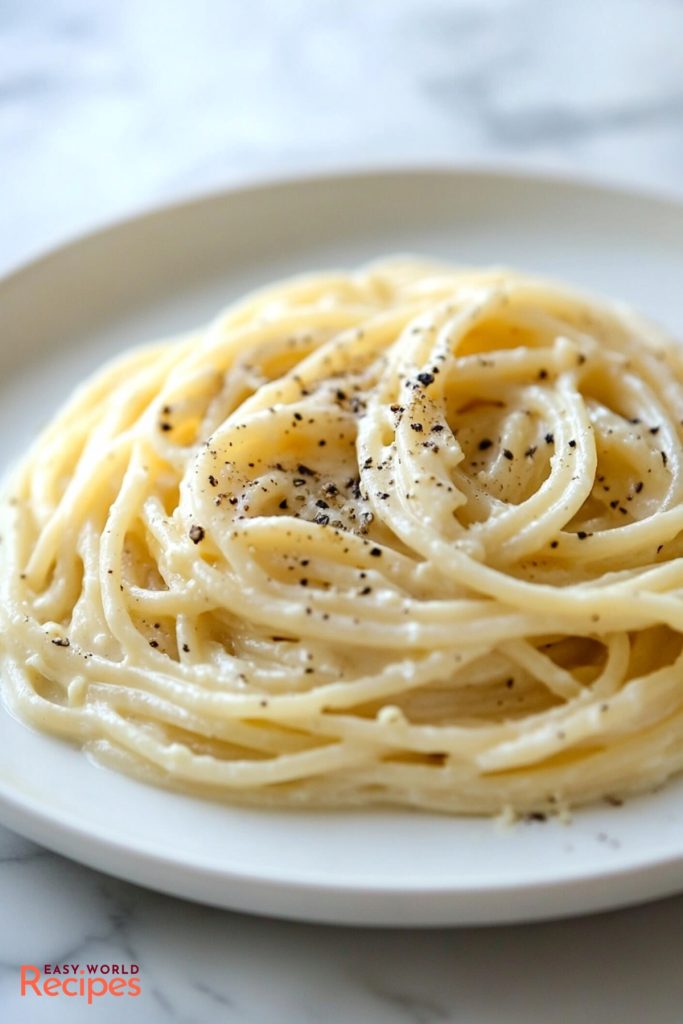
What is Cacio e Pepe?
Cacio e Pepe, literally translates to “cheese and pepper,”. It is a classic Roman pasta that’s very simple and full of flavor. It is made with just pasta, black pepper, and Pecorino Romano cheese – thats all you need! With just a few simple ingredients you can make something amazing.
The secret is in the technique. Mixing the cheese with starchy pasta water makes the creamy sauce. Cacio e Pepe is Italian food at its finest. Minimal ingredients, bold flavors, and pure comfort in a bowl!
Why I Love This Recipe?
I love this Cacio e Pepe recipe because it’s the perfect proof that simple ingredients can make something amazing and so delicious. It’s very quick to make and very satisfying. It’s perfect for a comforting and elegant dinner.
The pepper adds just the right kick. It’s balanced by the salty and flavorful Pecorino. And the starchy pasta water brings it all together into a creamy and delicious sauce. It feels very fancy and the flavors amazing. A timeless classic!
Key Ingredients & Substitutions for Cacio e Pepe
Pasta: Traditionally, tonnarelli pasta is used, but you can substitute with spaghetti, bucatini, or fettuccine for a similar texture.
Pecorino Romano Cheese: The star of the dish, Pecorino Romano has a salty, tangy flavor that’s essential for authentic Cacio e Pepe. Freshly grate the cheese for the best texture. If it’s unavailable, you can use a small amount of Parmesan, but Pecorino should be the main cheese.
Black Pepper: Coarsely ground black pepper adds a distinctive spice. For a more intense flavor, toast the pepper lightly before adding it to the pasta.
Pasta Water: The starchy water from cooking the pasta is crucial to creating the sauce. Avoid adding too much salt to the water, because the Pecorino adds enough saltiness.
Tools You’ll Need
- Large Pot: For cooking the pasta.
- Box Grater or Microplane: For grating the Pecorino Romano.
- Colander: To drain the pasta while reserving some of the cooking water.
- Large Skillet or Dutch Oven: For tossing the pasta with the cheese and pepper.
- Tongs: Ideal for mixing and coating the pasta with the sauce.
Step-by-Step Instructions for Cacio e Pepe
Cook the Pasta: Bring a large pot of water to a boil. Add 1 tbsp of salt and the pasta and cook until just before al dente, about 2 minutes less than package directions. Reserve 1-2 cups of the starchy cooking water, then drain the pasta.
Toast the Pepper: In a large skillet or Dutch oven over medium heat, toast the freshly ground black pepper for about 1-2 minutes until fragrant. This step intensifies the pepper’s flavor.
Add Pasta Water: Pour about 1 cup of the reserved pasta water into the skillet. Bring it to a simmer, allowing the pepper to infuse the water.
Emulsify the Cheese: Add the drained pasta to the skillet. Lower the heat and slowly add the grated Pecorino Romano while continuously tossing the pasta. Add more pasta water as needed to create a creamy, emulsified sauce that coats the pasta.
Adjust Consistency: Continue to toss until the sauce reaches your desired thickness. The sauce should cling smoothly to the pasta, with no clumps of cheese.
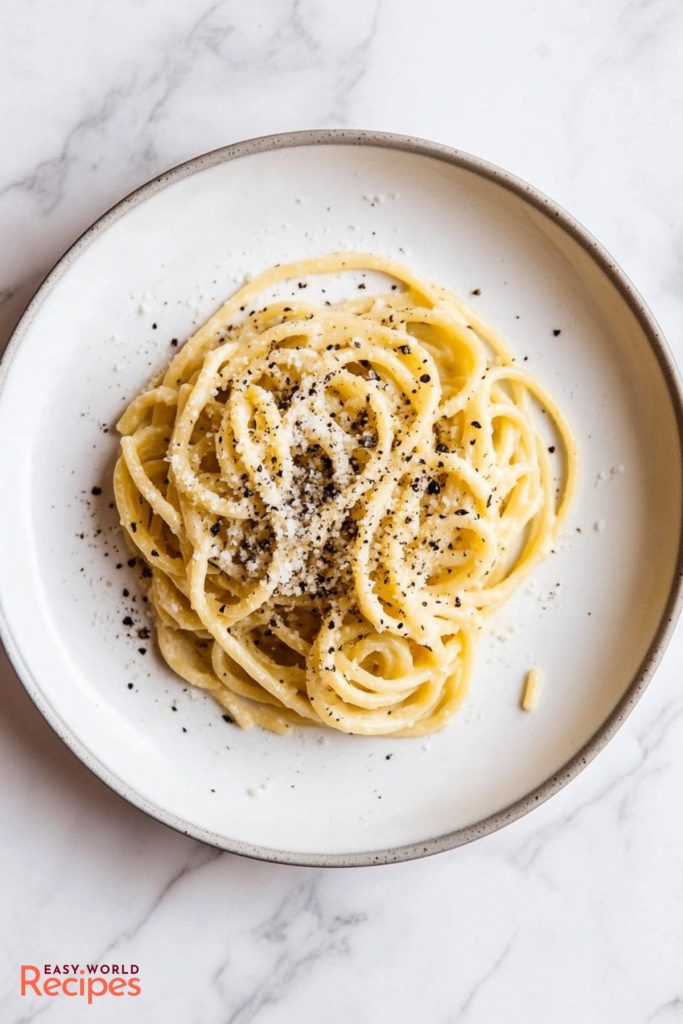
Plate and Garnish: Serve immediately, garnished with additional grated Pecorino and a sprinkle of black pepper for extra flavor.
Expert Tips for Perfect Cacio e Pepe
Use Freshly Grated Cheese: Skip the pre-grated stuff—it doesn’t melt as smoothly. Grate your Pecorino Romano fresh for the best creamy results.
Control the Heat: Keep the heat low when mixing the cheese and pasta water. High heat can cause clumping, and we want a silky sauce!
Don’t Skimp on Pasta Water: That starchy pasta water is magic for creating a smooth sauce. Add it little by little until the consistency is just right.
Toast the Pepper: Toasting the black pepper brings out its bold, aromatic flavor. It’s a simple step that makes a big difference!
Serving Suggestions
Cacio e Pepe is delicious on its own, but it pairs well with simple sides and Italian flavors:
- Green Salad: A fresh, light salad with arugula, olive oil, and lemon balances the richness of the pasta.
- Crusty Bread: Perfect for scooping up any leftover sauce. You can also serve it alongside garlic breadsticks.
- Italian Wine: Pair with a crisp white like Pinot Grigio or a light red like Chianti to complement the flavors.
Make-Ahead and Storage
Make-Ahead: It toasts the best when fresh, but you can cook the pasta and prepare the sauce components ahead, then combine just before serving.
Storage: Store any leftovers in an airtight container in the refrigerator for up to 2 days.
Reheating: Reheat gently in a skillet over low heat, adding a splash of water to help revive the creamy texture.
Print
Cacio e Pepe – Authentic Italian Recipe
- Total Time: 20 minutes
- Yield: 2 servings 1x
Description
This Cacio e Pepe recipe is light, flavorful, and so easy to make! With its rich cheese and pepper sauce, it’s a timeless pasta dish everyone will love.
Ingredients
- 8 oz pasta – tonnarelli or spaghetti
- 1 cup finely grated Pecorino Romano cheese
- 2 tsp freshly ground black pepper
- 1–2 cups reserved pasta cooking water
Instructions
- Cook the Pasta: Boil the pasta until almost al dente, reserving 1-2 cups of pasta water, then drain.
- Toast the Pepper: In a large skillet, toast the pepper over medium heat for 1-2 minutes.
- Add Pasta Water: Pour 1 cup of pasta water into the skillet with the pepper and bring to a simmer.
- Emulsify the Cheese: Add the pasta to the skillet. Lower the heat and toss in the Pecorino Romano, stirring to create a creamy sauce. Add more water as needed.
- Serve: Garnish with additional cheese and pepper, then serve hot.
Notes
Pasta Type: Tonnarelli or spaghetti is traditional, but other long pasta varieties work well too.
Cheese Texture: Freshly grated cheese melts best. Avoid using pre-grated cheese.
Adjust Consistency: Use more pasta water to reach the ideal sauce thickness.
- Prep Time: 10 minutes
- Cook Time: 10 minutes
- Category: Main dish
- Cuisine: Italian
Nutrition
- Calories: 550
- Sodium: 500mg
- Fat: 22g
- Carbohydrates: 60g
- Protein: 20g
Nutrition information
This website gives estimated nutritional information, which might change depending on the ingredients used.
Frequently Asked Questions (FAQ)
Can I use Parmesan instead of Pecorino Romano?
While Pecorino Romano is traditional, you can use a blend of Pecorino and Parmesan for a milder taste, but Pecorino should be the main cheese for authenticity.
Why does my cheese clump?
Cheese clumps if added over high heat. Lower the heat and add it gradually, tossing to prevent clumping.
Can I make Cacio e Pepe ahead of time?
It’s best fresh, but you can make the components separately and combine them before serving.