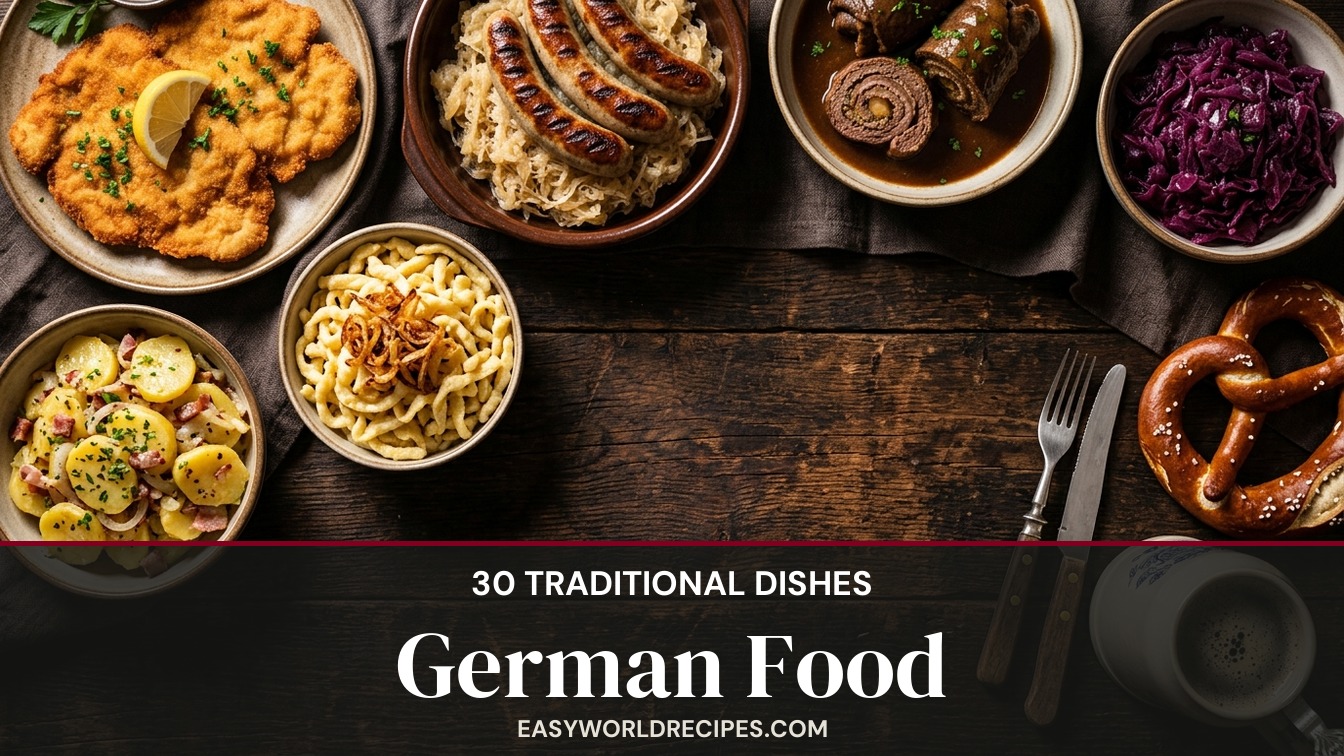
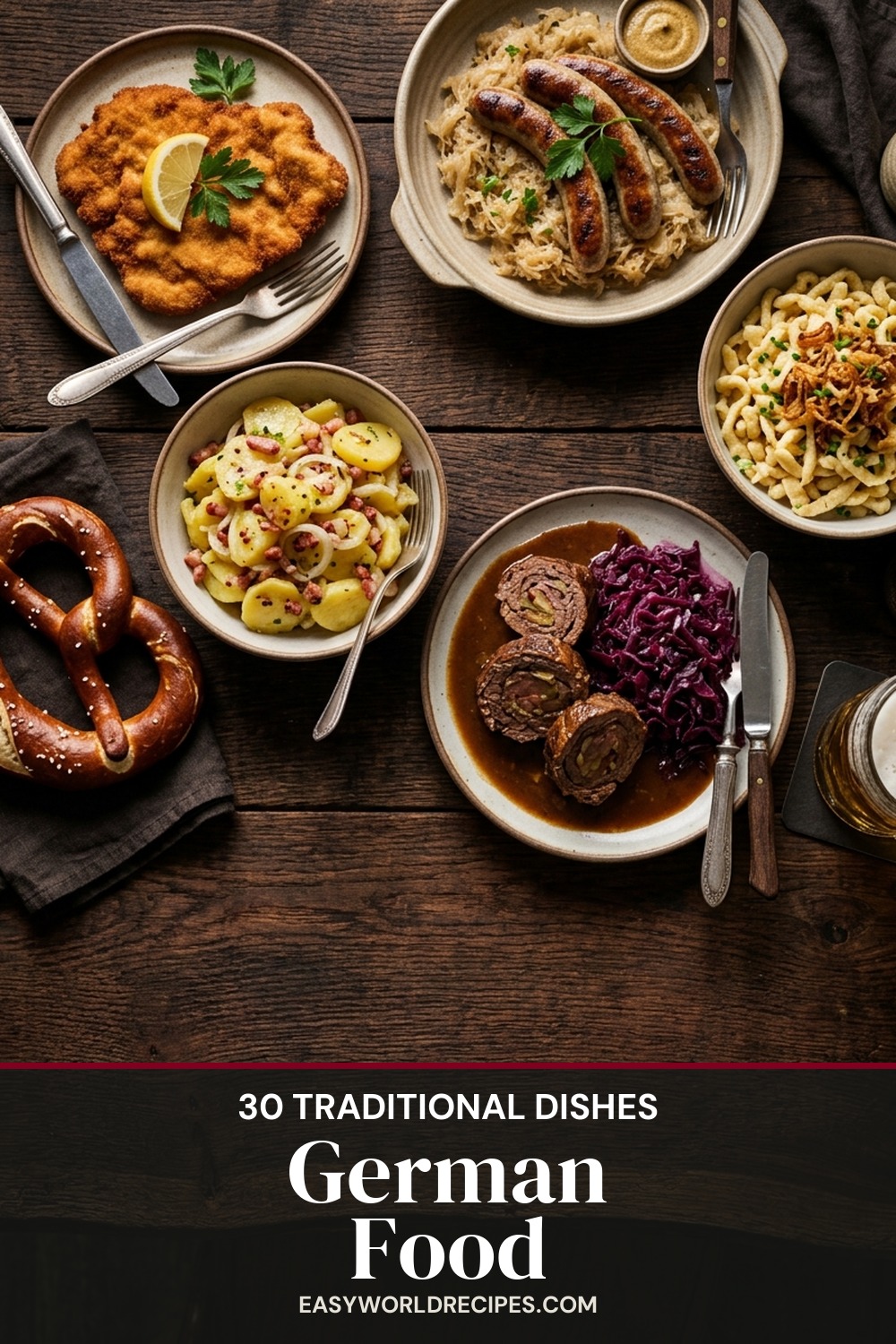
German food is built on pork, potatoes, cabbage and bread, and it is far more regional than most people expect. A Bavarian lunch and a Hamburg lunch have almost nothing in common.
The most famous traditional German foods are Schnitzel, Sauerbraten, Rouladen, Bratwurst, Currywurst, Schweinshaxe (pork knuckle), Spätzle, Kartoffelklöße (potato dumplings), Sauerkraut, Brezeln (pretzels) and Apfelstrudel. Germany’s unofficial national dish is Sauerbraten; its most-eaten everyday dish is closer to Bratkartoffeln and a sausage.
Most lists of German food are written by travel bloggers who ate the dish once. This one is different: every single item below links to a recipe we have made and tested, so you can put any of these on your own table tonight. Thirty dishes, grouped the way a German kitchen actually works.
New to German cooking? Start with German potato salad and pork schnitzel. Between them they teach the two techniques the rest of this list depends on: a warm vinegar-bacon dressing, and a properly dry, properly thin breaded cutlet.
Schnitzel and the Big Roasts
The dishes that anchor a German Sunday table, and the ones every Gasthaus has on the menu.

1. Wiener Schnitzel
Veal, pounded thin, breaded and fried in butterfat so the coating puffs away from the meat. By law in Austria and Germany, if it says Wiener it is veal.
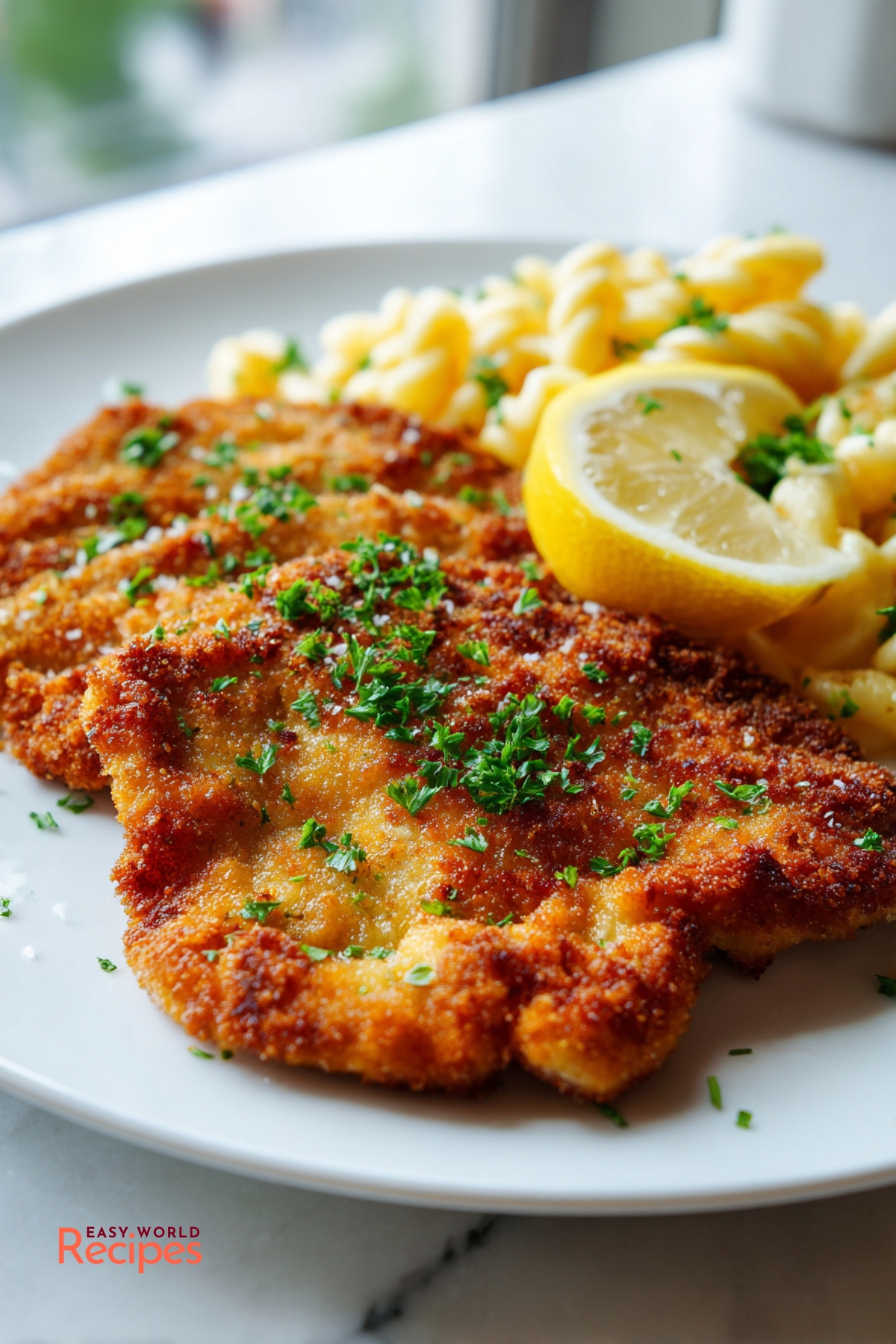
2. Schweineschnitzel (Pork Schnitzel)
The everyday version, and what you will actually be served most of the time. Cheaper than veal, faster to cook, and the one to learn first.

3. Jägerschnitzel (Hunter’s Schnitzel)
⭐⭐⭐⭐⭐ 5.0 from 3 reviews
Schnitzel under a dark mushroom cream sauce. The German original is breaded; the East German version often is not, and both are correct depending on who you ask.

4. Sauerbraten
⭐⭐⭐⭐⭐ 5.0 from 5 reviews
Beef marinated in vinegar and spice for three or four days, then braised and served with a gingerbread-thickened gravy. As close to a national dish as Germany has.

5. Schweinshaxe (Pork Knuckle)
A whole knuckle roasted until the skin shatters like glass. Bavarian, enormous, and the thing to order with a Maß of beer.

6. Schweinebraten (Pork Roast)
⭐⭐⭐⭐⭐ 5.0 from 2 reviews
Pork shoulder roasted with caraway and dark beer, the crackling scored into diamonds. The Sunday roast of southern Germany.
The Sausages
Germany has around 1,500 named sausages. These three are the ones you need to know.

7. Bratwurst with Sauerkraut
⭐⭐⭐⭐⭐ 5.0 from 1 review
The pairing that defines German street food. Nuremberg makes them finger-sized, Thuringia makes them long, and both are grilled over beechwood.

8. Currywurst
⭐⭐⭐⭐⭐ 5.0 from 1 review
Sliced sausage under curry-spiced tomato sauce, invented in Berlin in 1949 and now eaten about 800 million times a year. Served with a small wooden fork.

9. Leberkäse
A smooth pink meatloaf baked until the top blisters, sliced thick and eaten in a bread roll with sweet mustard. The name means liver cheese and it contains neither.
Home-Cooking Classics
What German families actually eat midweek. Cheaper cuts, long cooking, and no ceremony.
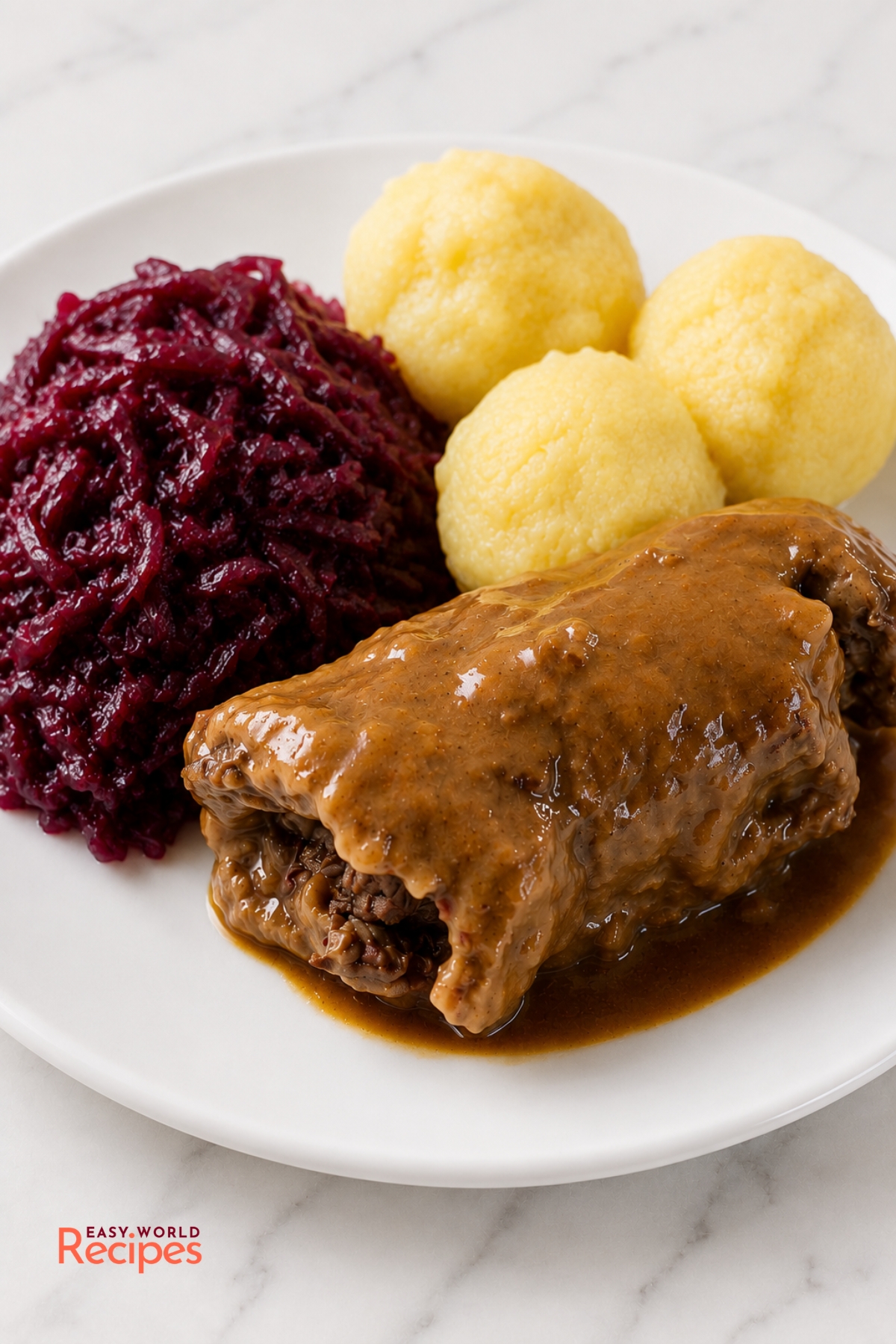
10. Rinderrouladen (Beef Rouladen)
⭐⭐⭐⭐⭐ 5.0 from 3 reviews
Thin beef wrapped around bacon, onion and pickle, browned and braised until it falls apart. The pickle is what makes it German rather than French.

11. Königsberger Klopse
⭐⭐⭐⭐⭐ 5.0 from 2 reviews
Pale poached meatballs in a white caper sauce, from what is now Kaliningrad. Served over boiled potatoes and unlike any other meatball you have had.

12. Hackbraten (German Meatloaf)
⭐⭐⭐⭐⭐ 5.0 from 4 reviews
Half pork, half beef, often with hard-boiled eggs set through the middle so each slice has a yellow centre. Gravy is not optional.

13. Kohlrouladen (Stuffed Cabbage Rolls)
Cabbage leaves around seasoned pork and rice, braised in stock. Every European country has a version; the German one is the plainest and the best for it.
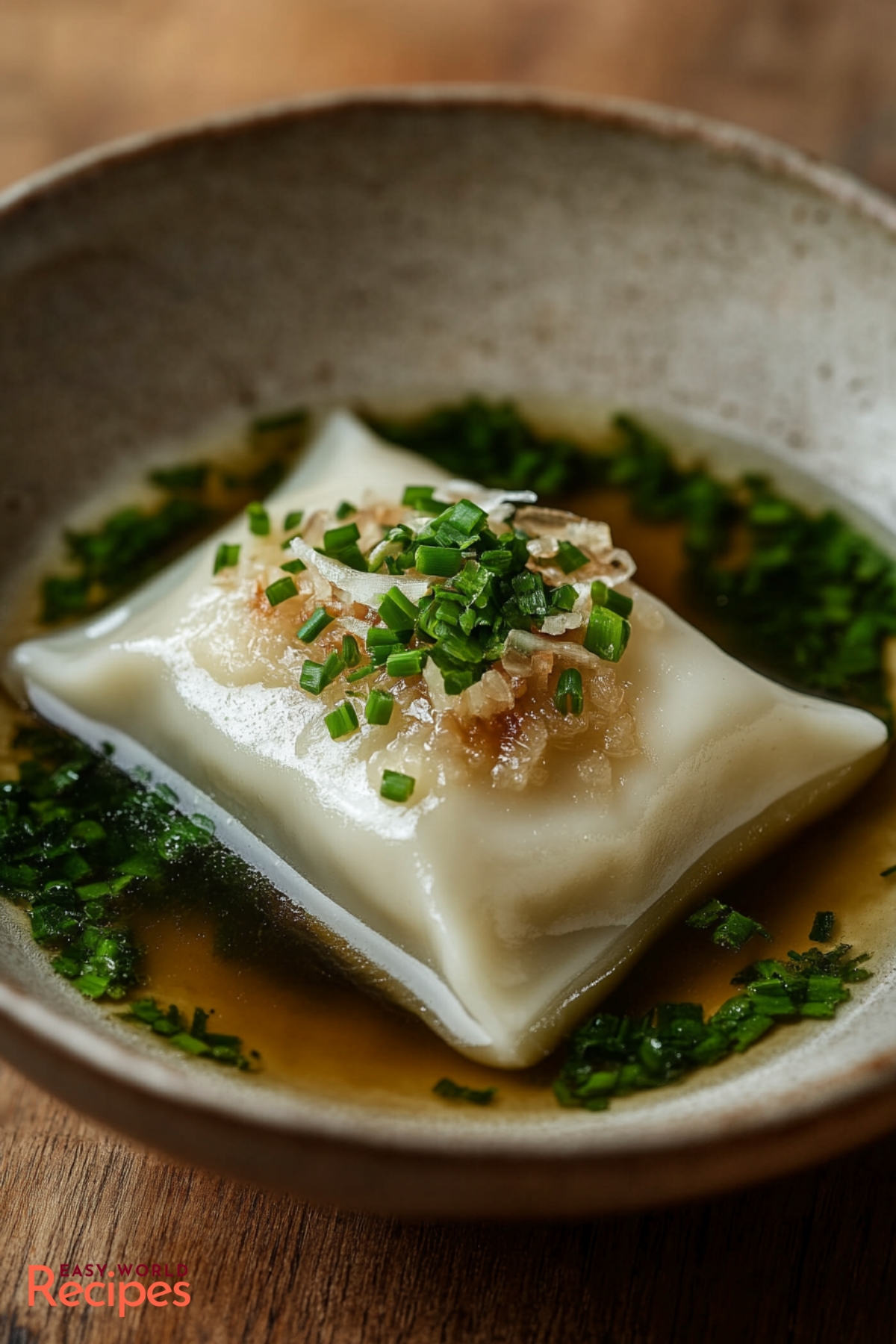
14. Maultaschen
Swabian pasta pockets stuffed with meat and spinach. Legend says monks invented them to hide meat during Lent, which is why they are nicknamed Herrgottsbscheißerle, God-foolers.
Potatoes and Dumplings
The German side dish is rarely an afterthought. Several of these are a meal on their own.

15. Spätzle
⭐⭐⭐⭐⭐ 5.0 from 1 review
Soft egg noodles scraped straight into boiling water. Fresh, they take ten minutes; with cheese and fried onion they become Käsespätzle and stop being a side dish.

16. Kartoffelklöße (Potato Dumplings)
Fist-sized potato dumplings, often with a crouton hidden in the centre. They exist to soak up Sauerbraten gravy and they are perfect at it.

17. Kartoffelpuffer (Potato Pancakes)
⭐⭐⭐⭐⭐ 5.0 from 2 reviews
Grated potato fried crisp and served with apple sauce. Sweet with savoury, and the standard Christmas-market snack.
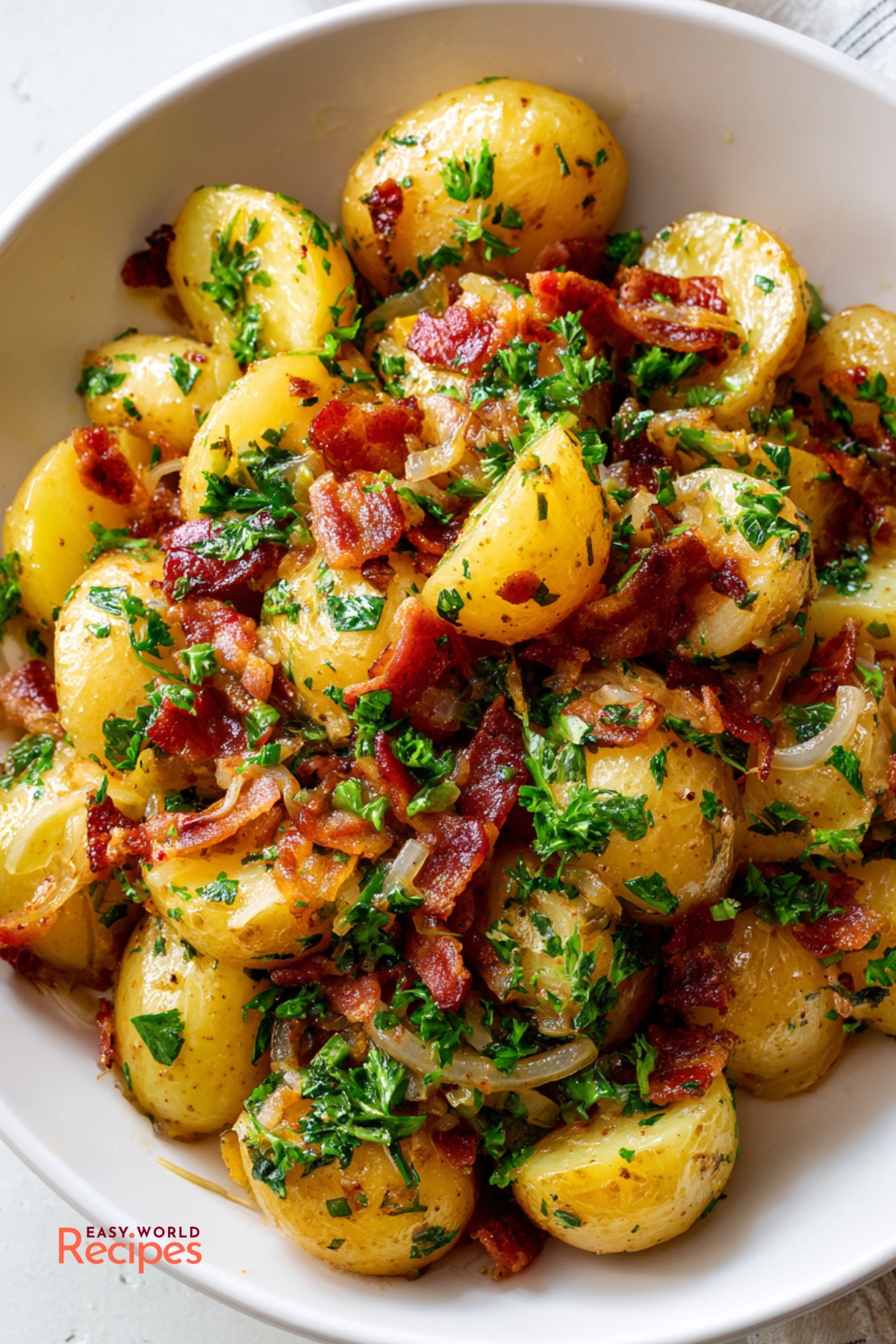
18. German Potato Salad
⭐⭐⭐⭐⭐ 5.0 from 1 review
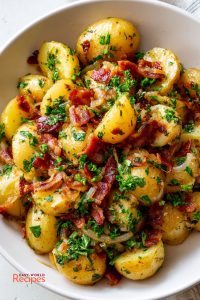
No mayonnaise. Warm potatoes in a bacon, vinegar and stock dressing, eaten at room temperature. The southern German version, and the one worth knowing.

19. Bratkartoffeln
Boiled potatoes fried with bacon and onion until the edges go dark. The most-eaten German dish nobody writes lists about.
Cabbage and the Sharp Sides
Germany preserves and pickles more than it dresses. These three cut through everything above.

20. Sauerkraut
⭐⭐⭐⭐⭐ 5.0 from 2 reviews
Cabbage and salt, and time. Cooked with apple, caraway and a little wine it becomes something much better than the jar suggests.
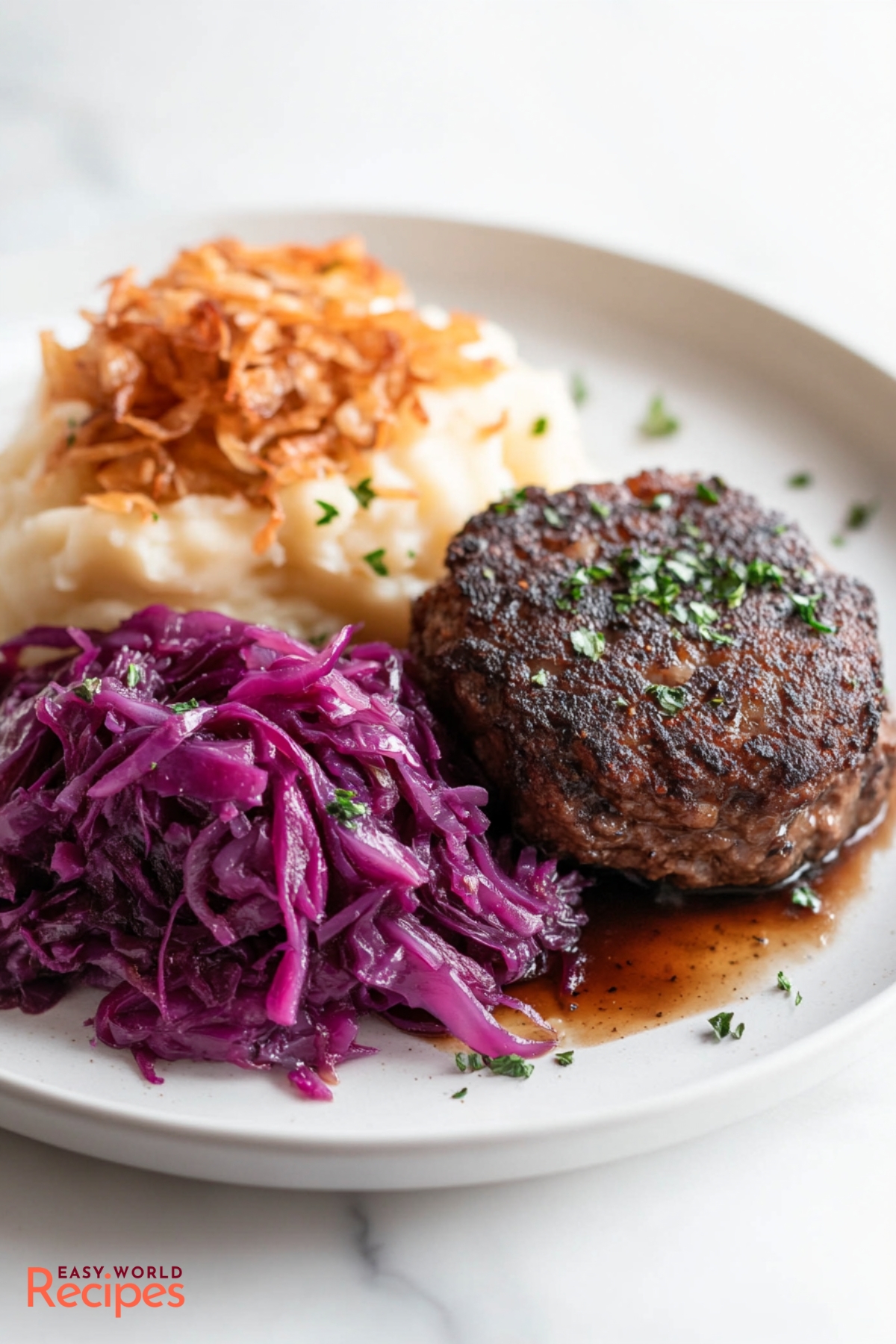
21. Rotkohl (Braised Red Cabbage)
⭐⭐⭐⭐⭐ 5.0 from 2 reviews
Red cabbage slowly braised with apple, vinegar and clove. It goes with every roast on this page and it is better made a day ahead.
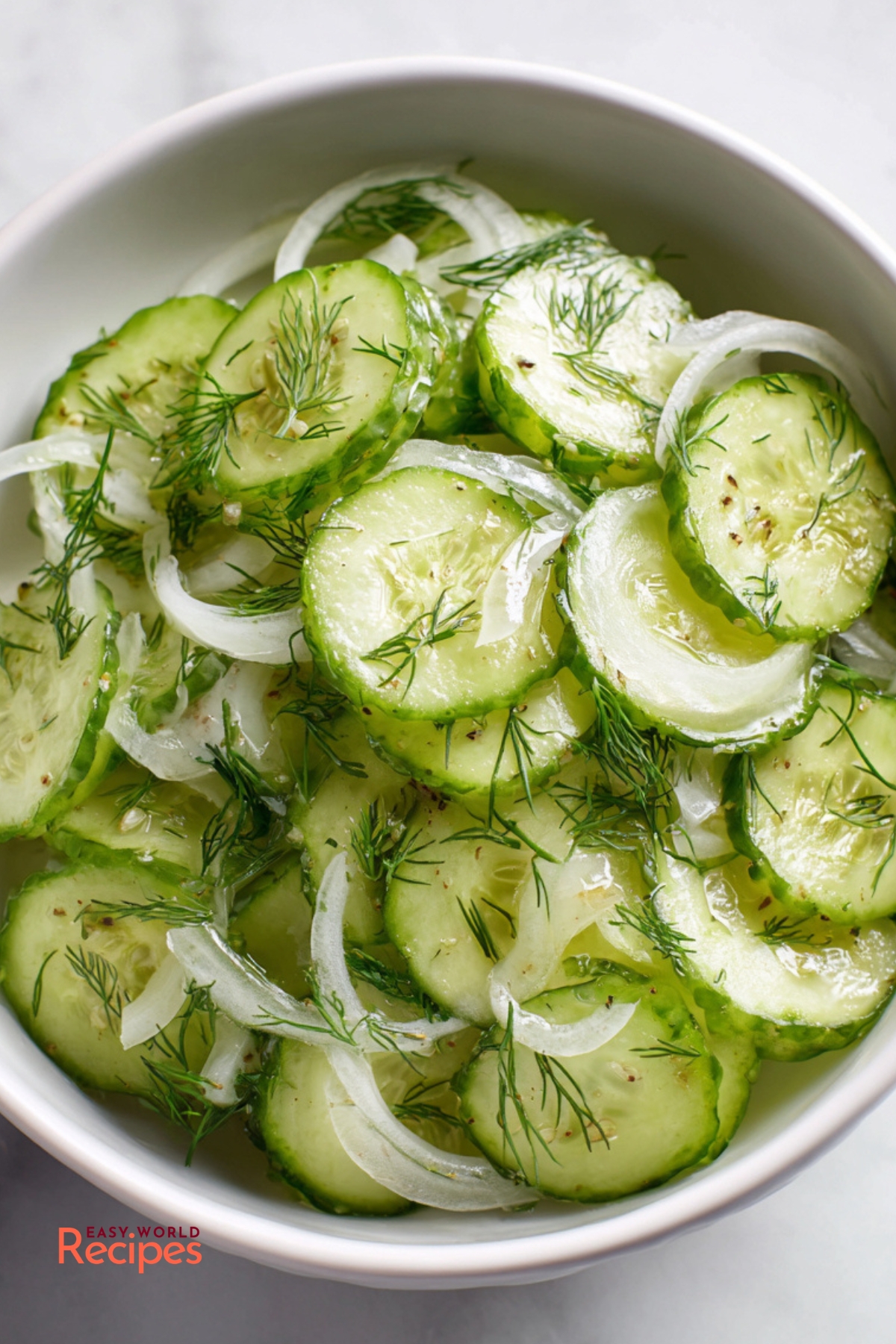
22. Gurkensalat (Cucumber Salad)
Sliced paper-thin, salted to draw the water out, then dressed with sour cream and dill. Fifteen minutes, and it saves a heavy plate.
Soups and Stews
German soup is thick, cheap and often the whole dinner.

23. German Goulash
Hungary’s dish, adopted and made darker and thicker with more onion and less paprika. Served over noodles or potatoes rather than as a soup.

24. Kartoffelsuppe (Potato Soup)
Potato, root vegetables and marjoram, with a sausage dropped in at the end. Marjoram is the flavour that makes it German.

25. Sauerkrautsuppe
Sauerkraut, smoked pork and potato in one pot. Sour, smoky and exactly right in February.

26. Flädlesuppe (Pancake Soup)
⭐⭐⭐⭐⭐ 5.0 from 2 reviews
Swabian broth with thin pancakes sliced into ribbons. A brilliant use for leftover crêpes and a genuinely elegant starter.

27. German Beef Noodle Soup
⭐⭐⭐⭐⭐ 5.0 from 1 review
Clear beef broth, soup vegetables and noodles. The Sunday soup, made from the bones of whatever was roasted the week before.
Bread and the Famous Bakes
Germany has more bread varieties than any country on earth. These three are the ones travellers come home talking about.
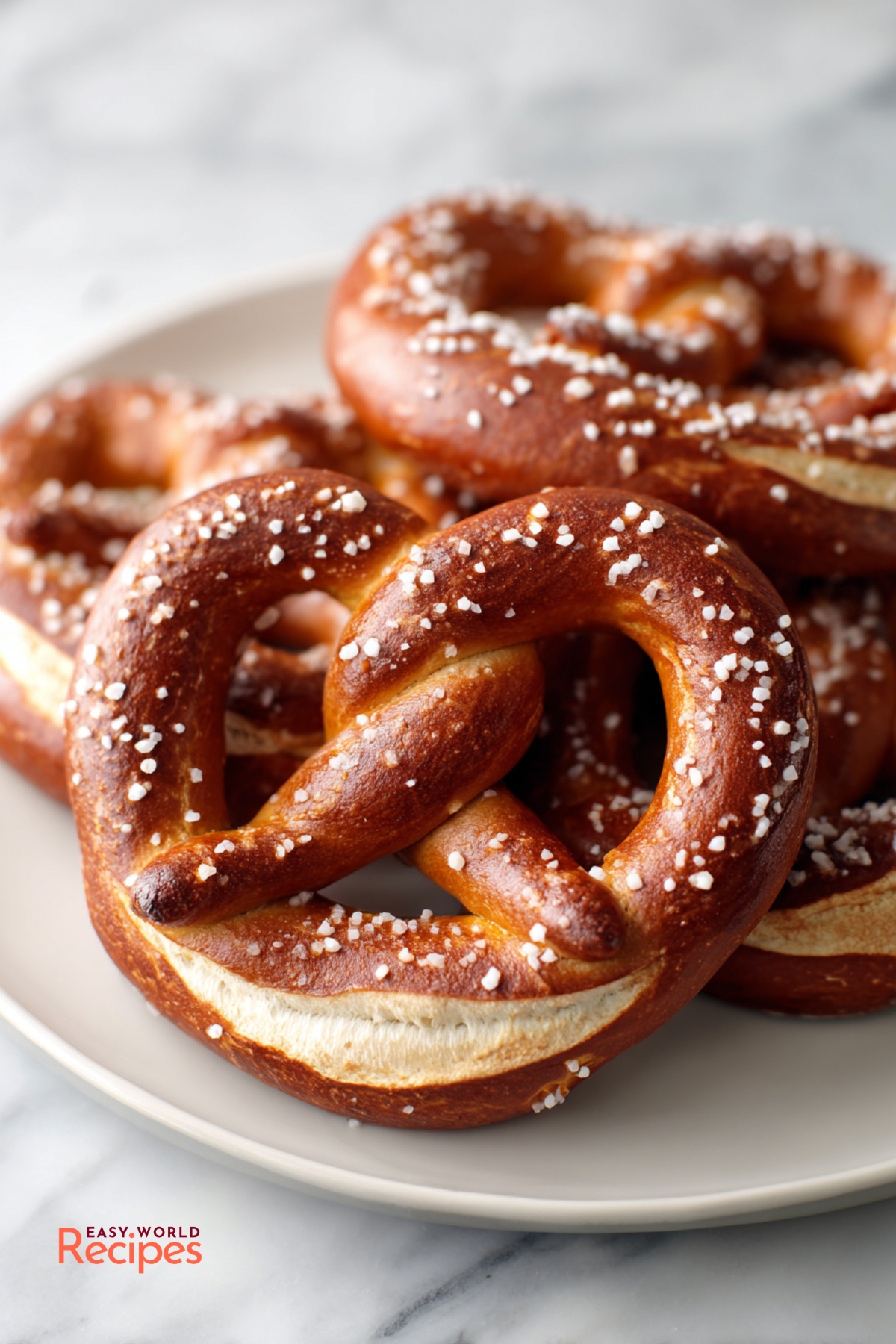
28. Brezel (German Pretzel)
⭐⭐⭐⭐⭐ 5.0 from 2 reviews
The lye bath is what gives the dark, glossy, faintly bitter crust. Skip it and you have a bread knot, not a Brezel.
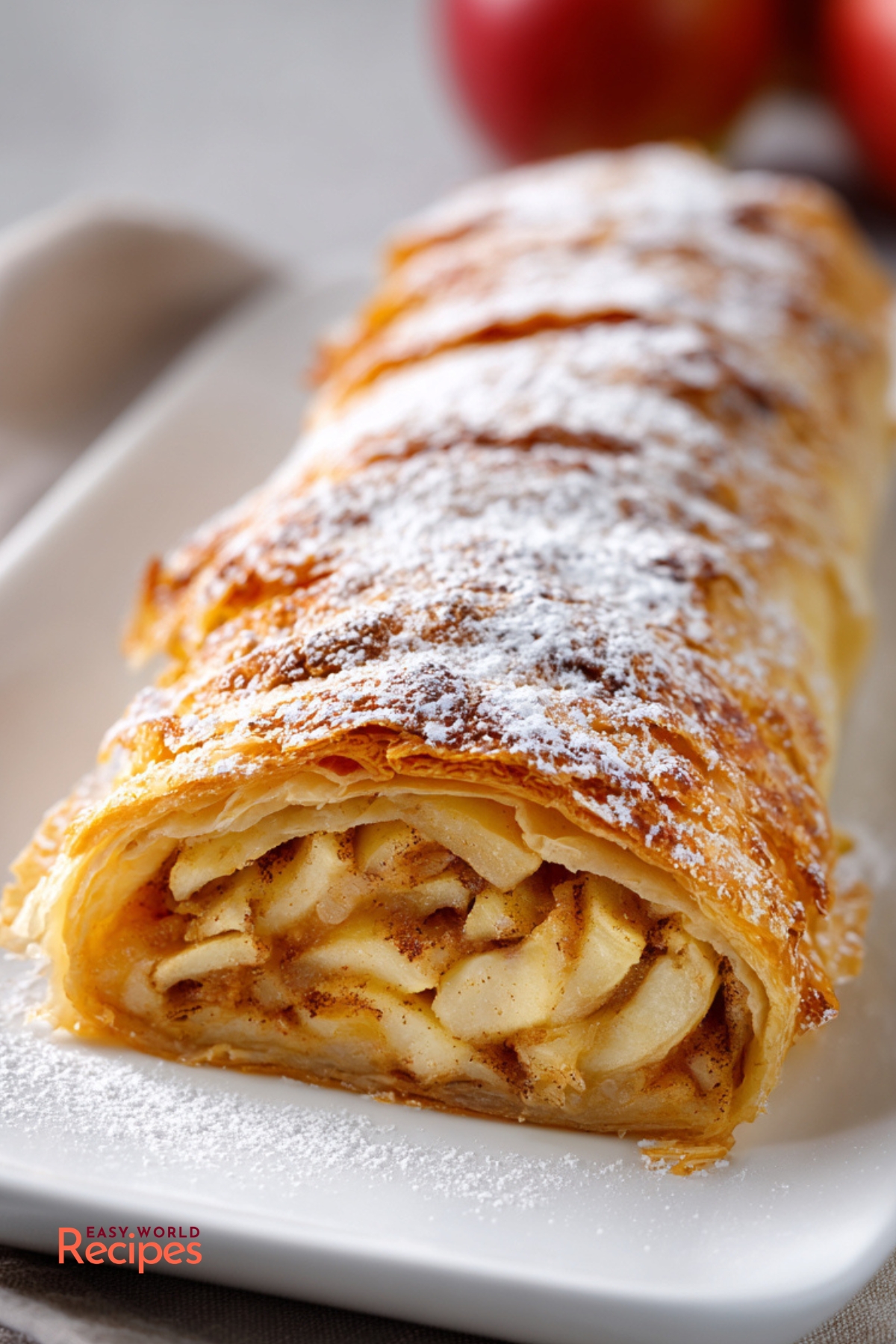
29. Apfelstrudel (Apple Strudel)
⭐⭐⭐⭐⭐ 5.0 from 1 review
Pastry stretched so thin you can read a newspaper through it, rolled around apple, raisin and cinnamon. Austrian by birth, German by adoption.

30. Stollen
⭐⭐⭐⭐⭐ 5.0 from 3 reviews
Dense fruited Christmas bread under a thick coat of powdered sugar, shaped to represent the Christ child in swaddling. Bake it in November and let it rest.
More German Cooking
The seasonal collections and the sweet side of the German table:
- German Desserts
- 40 German Christmas Foods
- Oktoberfest Food
- German Black Forest Style Chocolate Cake
- German Bee Sting Cake (Bienenstich)
- German Apple Cake
- German Berliner (Jam Doughnuts)
- German Lebkuchen
German Food FAQ
What is Germany’s national dish?
Germany has no official national dish, but Sauerbraten is the one most often named, with Schweinshaxe and Bratwurst close behind. Ask a German and the answer will depend on the region: Bavaria says Schweinebraten, Berlin says Currywurst, Swabia says Maultaschen.
What is the most eaten food in Germany?
Bread and potatoes, by a wide margin. Germany produces over 3,000 registered bread varieties and Germans eat more potatoes per head than almost anyone in Europe. The everyday plate is far more likely to be Bratkartoffeln with a sausage than a Schnitzel.
What are the top 5 traditional German dishes?
Schnitzel, Sauerbraten, Bratwurst, Schweinshaxe and Spätzle. Add Rouladen and Currywurst and you have covered what most visitors will be served in a week.
What is German comfort food?
Anything braised, and anything with potato. Rouladen, Königsberger Klopse, Kartoffelsuppe, Hackbraten and Käsespätzle are the dishes Germans name when asked what their grandmother cooked.
Is German food just sausage and sauerkraut?
No. That reputation comes from Bavarian export cuisine and Oktoberfest. Northern Germany is built on fish, potatoes and dark bread, the Rhineland has its own sweet-sour braises, and Swabia is a noodle and dumpling culture closer to Austria than to Berlin.
Which one are you cooking first? Tell us in the comments — and if you are building a whole German menu, our German desserts collection is where to go next.